→ Blood and Man / Barachi Elizur
The Two Houses of Israel / Avraham Tefilinsky
Published by the 'Shabbat' editorial team
In contrast to the Hungarian poskim who teach halakha from the words of the poskim, the students of the Chazon Ish argued that only in-depth study of Talmudic scholarship enables one to make a ruling. On contemporary methods of ruling in the Ashkenazi ultra-Orthodox world
Before the Holocaust, there was no situation in which a community would appoint a rabbi who was not authorized to teach by one of the great rabbis of the generation who was authorized to do so. From a study of the books of the Poskim, it appears that the need for authorization began as an ancient regulation in European countries. The reason for the regulation was for two reasons: first, so that they would truly know that he was worthy of teaching and that a situation would not arise in which a person who was not worthy of teaching would teach. The second (and probably the main) reason was to preserve the honor and authority of the town rabbis and to prevent other scholars from teaching law to the public in a place where a rabbi authorized by the city officiates.
This is what Rabbi Yechiel Michal Epstein writes about in his book 'Aruch Shulchan':
And according to the times before us and even earlier generations, each city chooses a distinguished rabbi to instruct and judge, and he is considered a distinguished rabbi for the entire city and the surrounding area, and there is no permission for another, even one who has reached the teaching position, to instruct and judge in this place unless the rabbi of the city gives him permission. For this, ordination is given to him so that they can elect him as rabbi in some community, but without ordination it is forbidden to be a rabbi or teacher of righteousness, and this is the practice of our predecessors, God forbid it should change, and this is the main issue of ordination at this time, and this is a kind of taking permission from witnesses who have reached the teaching position (Yora Deah, Rambam, section 29) .
With the rebuilding of the ultra-Orthodox community in Israel after the destruction of European Jewry, the ultra-Orthodox communities concentrated primarily in Jerusalem and Bnei Brak. This created a new situation: no longer communities scattered in small towns, but a concentration of hundreds of communities in a single jurisdiction.
Those who stood at the head of this renewed community were the Chazon Ish and Rabbi Yitzhak Ze'ev Soloveitchik of Brisk, who, together with the great Admors, began to restore and reshape the image of the renewed Haredi community. For ideological reasons, the leaders of the community refused to recognize the exclusive authority of those who held the title of city rabbi, a fact that violated the regulation not to instruct in the place of the city rabbi. Because of this, we are witnessing the proliferation of teachers of instruction in every city, who do not even come to receive approval from the serving city rabbi, to the point that in most cities there are groups that recognize a particular rabbi as the city rabbi, while other groups recognize another rabbi as the city rabbi.

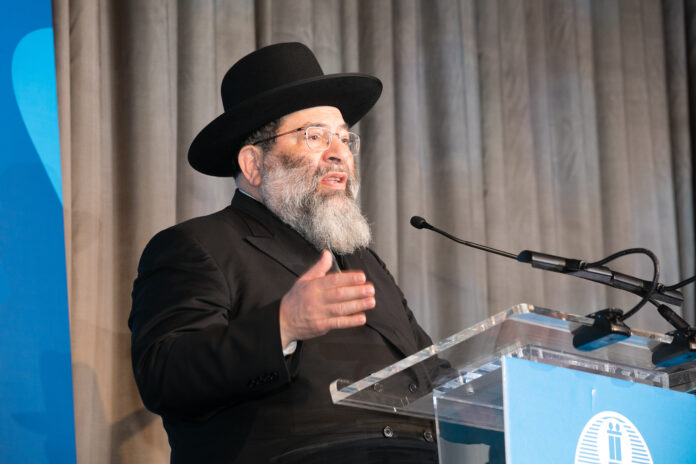
Rabbi Nissim Karelitz. Photo: Hebrew Wikipedia.
Skill and experience
And yet, how can a scholar serve as a rabbi and teacher of instructions in the Haredi community? Is there any authority for his rulings? What are the minimum requirements required to serve as a rabbi-decision maker? Well, two different schools of thought currently make up the group of teachers of instruction in the Ashkenazi Haredi community. One school is represented primarily by Rabbi Shmuel Halevi Wasner, who has served for about fifty years as the rabbi of the Zichron Meir neighborhood in Bnei Brak (author of the ten-part 'Shevat Halevi' Responsa). His teaching method is considered the Hungarian tradition in halachic rulings. The second school is represented by the students of the Chazon Ish, led by Rabbi Nissim Karlitz, ab beit din in Bnei Brak and author of the books 'Hot Sheni'.
Hungarian tradition holds that in order to be qualified to teach, one must be familiar with the Shulchan Aruch symbols relevant to one's lifestyle and give advice to those who carry them. After a rabbi has learned and memorized the Shulchan Aruch symbols of blessings, Shabbat, holidays, kashrut, interest, and nidah, he still needs to "use" (i.e., internship). He is required to stay with a teaching teacher during the hours when he receives an audience, and to see how the rabbi analyzes each and every question that comes to his door. In this way, he acquires practice and skill in how to compare one thing to another in order to find the answer in the words of the poskim.
If the rabbi he serves sees that he has sufficient skill to resolve halachic questions, and is also knowledgeable in the words of the poskim, he will grant him a certificate of certification according to which he is qualified to teach independently. Although the method is perceived as a Hungarian tradition, in practice rabbis were certified this way in most communities in Europe before the Holocaust, and it is still the most accepted method even today among the majority of the Haredi public in Israel, as well as in the US and Europe.
Contrary to the Hungarians, the students of the Chazon Ish hold that the proper way of teaching is only by studying the issues of the Shas – and not only by studying the books of the Poskim – and by them every question and matter should be decided. The rabbis from the school of Rabbi Nissim Karelitz will not only authorize to teach those who are well-versed in the Shulchan Aruch and its commentaries; they will want to be convinced that this scholar has extensive control over the areas of the issues in depth and breadth, and even then they will not give him a letter of ordination to the rabbinate, but will only express their opinion to their students and acquaintances that this scholar can be asked halachic questions. It should be noted that the Chazon Ish also acted in this way for himself. He never sought a certificate of ordination, and yet he ruled on the most complicated halachic questions.

Rabbi Shmuel Halevi Wasner, 1973. Photo: Hebrew Wikipedia.
Shas from the beginning
Two main reasons caused the Chazon Ishnikim to adopt a different approach than that which was practiced before the Holocaust. First, anyone who deals with the words of the poskim knows that many times, after re-examining the body of the issue and the words of the Rishonim, it becomes clear that the words of the poskim were not properly understood. The second reason is the responsibility for the continuation of the Torah tradition. The Chazon Ish believed that there would be more than enough rabbis who taught instructions from among other communities, while there would be a shortage of Torah workers with complete dedication, who must understand the winding paths of difficult and complicated issues in the Shas.
Thus, with strength and determination, the Chazon Ish led a group of young students and assigned them the coveted role of Torah moralists. He himself published his writings, which were characterized by a bold writing style of explanations and establishing methods of interpretation on Shas issues, as if he were a contemporary of the Rishonim. While the style of the books of the great sages of the generation was characterized by writing halakhic responsa and explaining the Maimonides' method according to the Briskan method, the students were surprised by the style of the Chazon Ish's books and some even had reservations about them.
Of course, such independent study often leads to conclusions that are inconsistent with the rulings of the great rabbis and with the ancient customs of many communities. However, despite the lack of encouragement from other rabbis of his time, the Chazon Ish established a new kingdom of Torah, and even encouraged his students when he expressed himself in glowing descriptions of them. For example, he called his student Rabbi Dov Lando (now the head of the Slobodka Yeshiva), who was then only nineteen years old, 'the roar of a lion of holiness and purity.' He called Rabbi Gedaliah Nadel, who was then a rabbi in the early 1930s, 'the lion of the pack.' After the Chazon Ish's passing, his student and confidant, Rabbi Chaim Greinman, continued the mission assigned to him by his rabbi-uncle. In Rabbi Greinman's first book, 'Klila Devarda', the Chazon Ish's notes appear, and in his first book in the series "Chiddushim ve Bi'aurim" (New Commentaries and Commentaries), a long halachic letter written to him by the Chazon Ish appears at the beginning of the book. Since the passing of his rabbi until now, Rabbi Greinman has published the books of 'Chiddushim ve Bi'aurim' (New Commentaries and Commentaries) on all the tractates of the Talmud and Mishnah, from Tractate Berakhot to Tractate Oktsin, and his style is similar to that of his rabbi.
And what did Rabbi Schach think?
Rabbi Greinman furthered and established his master's method, and thus courts of students of the Chazon Ish arose, with their influence growing, especially in the field of halakhic law. Today, it seems that a rabbi who considers himself to be of little value will go to clarify his doubts about halakhic law precisely with those rabbis who belong to the Chazon Ish school, even though most people still flock to the 'standard' rabbis who are qualified in the school of Rabbi Wasner (who, surprisingly, was also very close to the Chazon Ish. Students of the Chazon Ish will explain that Rabbi Wasner entrusted the Chazon Ish with the continuation of the Hungarian tradition, in case his own method failed).
Many believe that Rabbi Schach also sided with those who believe that the ordination of rabbis and teachers in Israel should be carried out according to the Hungarian tradition. Rumor has it that Rabbi Schach was concerned about being too open to encouraging every scholar to determine and conclude halakhic law by working hard and studying the issue, lest in the end even those who did not receive proper guidance would come to draw incorrect halakhic conclusions. For this reason, some believe that he encouraged his student Rabbi Mordechai Gross to found the 'Hanikhei HaYeshiva' community, which includes synagogues and teaching houses scattered throughout Jerusalem, Bnei Brak, and Kiryat Sefer, and in which they are careful to appoint rabbis only according to the Hungarian tradition, such as the school of Rabbi Wasner.
However, for Hazon Ish and his disciples, the continuation of the transmission of the Torah was more important than anything else, and they too established communities and teaching houses from the seminary of Rabbi Nissim Karelitz, and as a 'counter-response' to the communities headed by Rabbi Mordechai Gross, they placed Rabbi Shevach Rosenblatt, a student of Rabbi Dov Landau, at the head of their communities and teaching houses.

Rabbi Karlitz's court in Bnei Brak. Hebrew Wikipedia.
Two Thousand Torahs
If you think that the time has come to invite all those seeking reform, openness, and innovation to unite with the Chazon Ish school and lead the desired change, then the opposite is true.
Along with his boldness and openness, the Chazon Ish set a very clear framework for his students: the role in transmitting the Torah is to clarify the issues of the Shas as written and in their entirety according to the interpretations of the great Rishonim whose words have been with us throughout the generations (and not according to the writings of the Rishonim that were discovered in the various Genizahs only today).
The Chazon Ish originally interpreted the words of the Gemara according to which the world has existed for six thousand years, with the first two thousand being called 'two thousand chaos,' the second two thousand being called 'two thousand Torah,' and the last two thousand being 'two thousand Messiah.' Two thousand Torah, the Chazon Ish interprets, are the two thousand years in which the Creator of the world led His world in the style by which the Torah would be revealed. During these two thousand years, the moralists of the Torah lived from the giving of the Torah to the signing of the Talmud. Since the work of the Shas aims to discover the Creator's will in how to determine the law, only the reality of 'two thousand Torah' is decisive. We, who live after this period, our role is to investigate matters according to the course of the issue and derive from them the appropriate determination of the law.
Today, although many of the teachers are ordained according to the Hungarian tradition, the number of rabbis belonging to the Chazon Ish school is growing. Although they are still not very numerous, among the general public (which ultimately determines the outcome) they are held in higher esteem than other rabbis. A halachic ruling by a rabbi belonging to the Chazon Ish school has great significance among the public, which of course results in a whole new industry of material, which requires an article in itself.
Rabbi Avraham Tefilinsky serves as a teacher among communities of the Teshuva faith.
All credit goes to Rabbi Avraham Tefilinsky and Makor Rishon



No comments:
Post a Comment