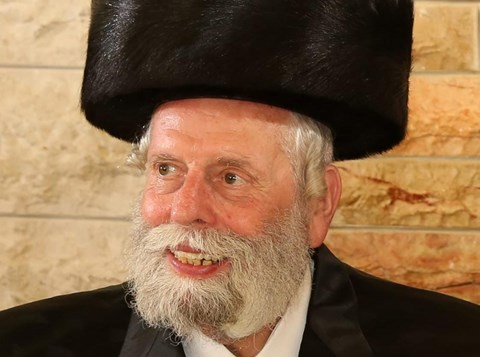
מחשובי חסידי באיאן היה הרה"ח רבי עקיבא יוסף דייטש ז"ל מוותיקי המלמדים בתלמוד תורה תשב"ר בבני ברק, איש ירושלים שהתגורר בבני ברק והיה עובד ה' שלא פספס תפילה במניין. הלווייתו בשעה 18:30 משמגר להר המנוחות
7משה ויסברג , י"ד אב תשפ"ג all credit goes משה ויסברג and bhol.co.il to 01/08/2023 17:19
חינך אלפי תלמידיםרבי עקיבא יוסף דייטש ז"לצילום: באדיבות המשפחה
ברוך דיין האמת: מבית החולים 'הדסה עין כרם' בירושלים מגיעה הידיעה המעציבה על לכתו של הרה"ח רבי עקיבא יוסף דייטש ז"ל, מחשובי חסידי באיאן ומוותיקי המלמדים בתלמוד תורה תשב"ר בבני ברק והוא בן 80 בפטירתו.
בתקופה האחרונה חלה ונחלש ורבים התפללו לרפואתו של הרב עקיבא יוסף בן אסתר גיטל, אך למגינת לב השיב את נשמתו ליוצרה.
רבי עקיבא יוסף זצ"ל נולד בשכונת קטמון בירושלים, לאביו הגה"ח רבי מרדכי דוד דייטש זצ"ל, מחשובי חסידי קרלין, ומגדולי השקדנים ותלמידי החכמים בירושלים שהיה מקורב לגאוני וצדיקי הדור. סבו היה ראש משפחת דייטש בירושלים הרה"צ רבי מתתיהו דייטש זצ"ל, ולאמו מרת אסתר גיטל ע"ה, בתו של הרה"צ רבי יחיאל יהודה שלזינגר זצ"ל.
בהגיעו לפרקו נשא את רעייתו שתחי', בתו של הרב החסיד רבי עזריאל שאול פרלמוטר ז"ל, מחשובי חסידי סאטמר.
היה נו"נ לבעל 'לב העברי', הגרי"ז מינצברג ו'היהודי הקדוש' זי"ע.
במשך עשרות שנים שימש ר' עקיבא כמלמד בתלמוד תורה תשב"ר בבני ברק, שם היה מלמד מוערך וותיק שתחת שרביטו עברו אלפי ילדים אותם חינך במסירות.
ר' עקיבא היה מסור לילדים וצעירי הצאן במסירות מופלאה; היה סמל ודוגמא אצל התלמידים שזוכרים עד היום את תקופת לימודם אצל הרב'ה דייטש.
היה אדם ירא שמים מרבים שמעולם לא הפסיד תפילה במניין, קבע עיתים לתורה ותפילתו הייתה כמונה מעות.
המנוח התגורר בבני ברק והיה ממתפללי בית המדרש דחסידי מאקווא ברחוב רבנו תם בני ברק ר' עקיבא למרות שלא התגורר בירושלים היה הולך בבני ברק עם הקאפטן הירושלמי המסורתי.
כמדי יום חמישי היה עולה לירושלים לפקוד את שריד בית מקדשנו שם היה נושא תפילות נרגשות.
בשנה האחרונה עבר להתגורר ליד ילדיו בעיר ביתר עילית והאדמו"ר מבאיאן אף ביקרו בביתו לאחרונה.
זכה והותיר אחריו דור ישרים מבורך, את רעייתו שתחי' שעמדה לימינו במסירות, בנים ובנות, חתנים וצאצאים הממשיכים את דרכו.
מסע הלוויה היום בשעה 18:30 מבית הלוויות שמגר בירושלים להר המנוחות, שם ייטמן.
INSlabodka and beyond, everyone knows that for 93-year-old Rosh Yeshivah Rav Dov Landau, there’s no time for public appearances, meetings, or events. Even talmidim in search of advice, and visitors and askanim hoping for a brachah, know they’ll have to catch the Rosh Yeshivah between his many daily chavrusas. That’s why it was an unusual — and joyous — surprise that the Rosh Yeshivah agreed to travel to the US for a week of chizuk and to attend the massive Adirei HaTorah event at Wells Fargo Center in Philadelphia earlier this month. (It was actually his second chizuk trip — the first was in October of 2021, the first time he’d been out of Eretz Yisrael since arriving with his family from Poland as a seven-year-old child.)
Reb Dov, as he’s affectionately known, is one of the greatest, living talmidei chachamim, a grandson of Slabodka founder Rav Eizik Sher, scion of Strikov chassidus,talmidmuvhak of the Chazon Ish. Reb Dov is far from a practicing chassid — he’s the quintessential Chazon Ish’nik — yet Slabodka has many chassidish talmidim, and several times a year he will invoke the Strikover and Vorka minhagim of his youth. In conversation, he’ll often quote a chassidish vort and incorporate historical details, alongside the mesorah he received from the Chazon Ish and his talmidim. In fact, many contemporary rebbes and mashpiim are his talmidim, including Rav Tzvi Meir Zilberberg and Pnei Menachem Rosh Yeshivah Rav Shaul Alter, and perhaps his closest friend was Rav Avraham Genechovski, a rosh yeshivah in Tchebin. (On Shabbos afternoon many years ago, the two friends would stand in the front of the Slabodka beis medrash and speak in a code all their own.)
Despite Reb Dov’s personal strictures, his days permeated with Torah learning and his constant longing for nothing more than to be in his room with his towering stacks of seforim as his companions, perhaps it is the eclectic mix of those closest to him — people like his Ponevezh mashgiach Rav Eliyahu Dessler; Ramat Hasharon’s Rav Yaakov Edelstein, the “older bochur” who took him under his wing in Ponevezh; and MK Moshe Gafni, who garnered Rav Dov’s halachic ribbis ruling over a government savings plan for child benefits — that has given him a unique language with the throngs he met in the Tristate area.
What did Reb Dov’s day look like in a week across the ocean, separated from his beloved beis medrash, his seforim and his still-grueling schedule?
Sunday, June 4
Please, No Fuss
Immediately upon the Rosh Yeshivah’s arrival, he traveled to a chizuk event at Yeshivah of Spring Valley, where he gave the children a brachah that their teachers should reap much nachas from them. He’d altered the regular brachah and didn’t say that their parents should reap nachas, because there are also orphans in the school, and he showed how one needs to be extra-careful not to hurt their feelings.
At the Adirei HaTorah event that night in Philadelphia, he refused to enter alone — he didn’t want anyone making a “matzav” out of him. He even motioned that they remove the special chair they’d prepared, and instead bring the same chair that everyone else was sitting on. He refused to sit until a regular chair was brought.
Monday, June 5
Close the Sefer and Daven
In Passaic, Rav Landau met with Passaic Rosh Yeshivah Rav Meir Stern, who shared a question his own students often ask him: “What is the way to attain ahavas Torah?” Reb Dov was eager to hear this venerated gadol’s answer, and Rav Stern repeated what he’d heard in the name of the Chazon Ish: that by engaging and strengthening one’s commitment to the Yud Gimmel Ikrim (The 13 Principles of Faith), one reaches true ahavas haTorah. Reb Dov then answered, “That’s an idea more suited to angels than people…” He went on to tell how, when the Ohr Someach was perplexed by a difficult sugya he was learning, he would close the sefer and begin to daven — not that Hashem illuminate his mind with understanding, but rather that he should have more ahavasTorah — that if he had more ahavas Torah, then he would merit more understanding.
From there, Reb Dov continued to Boro Park, where Mir Rosh Yeshivah Rav Elya Brudny paid him a visit. Before they met, while Rav Brudny was waiting for Rav Landau, someone approached him and asked for advice on a certain matter; Rav Brudny was taken aback: “We have ruach hakodesh in this house and you’re asking me for advice?
After the two roshei yeshivah spent time delving into a deep discussion in Kodshim and gave each other mutual brachos, Rav Landau went on to deliver a shiur in Novominsk. When he entered, the audience began to sing “Yamim” in his honor, but Rav Landau stopped in his tracks and motioned for them to desist. This happened wherever he went — he didn’t allow anyone to sing in his honor, and only allowed songs of ahavas Torah. Like that same evening in the Bethel shul, where thousands of people crowded in. At the end of the shiur, he asked them to sing songs of simchah for Torah, and the Rosh Yeshivah himself stood and danced for a few long moments while the crowd sang “Toras Hashem Temimah.”
Tuesday, June 6
A Blessing to Change Your Life
Rav Landau visited Yeshivah Darchei Torah in Far Rockaway, where Rav Yaakov Bender filled him in on recent New York Board of Education decisions about manipulating curriculum in order to reach substantial equivalency levels. In light of this, in addition to the tireless efforts by askanim and guided by gedolei Torah, it was suggested that when davening Shacharis in school, in the brachah of Ahavah Rabbah, the children should sing the words with kavanah and plead to Hashem to lift the decree.
The Rosh Yeshivah continued on from there to Yeshivah Gedolah Darchei Torah, whose rosh yeshivah, Rav Shlomo Avigdor Altusky, was there to greet him amid the crowd that had gathered. When Rav Altusky welcomed the Israeli rosh yeshivah, he mentioned how, in Rav Landau’s previous chizuk mission almost two years ago, the Rav had quoted the words of Rabi Akiva Eiger, but stopped in the middle out of concern that he was not quoting the words precisely, and he asked that a Teshuvos Rabbi Akiva Eiger be brought to him so he could check. Rav Altusky added that this left a deep impression on the talmidim of the yeshivah — to see that this gaon in all areas of Torah, including the words of Rabi Akiva Eiger, was asking for a sefer just to double check the accuracy.
Wednesday, June 7
He Was Never Swayed from Emes
The Rosh Yeshivah then traveled to Lakewood, where he delivered a shiur in BMG to thousands of bochurim and avreichim who filled the hall to capacity, and for those who were stuck outside, a live hookup was connected to other bateimedrash. Rav Landau proceeded to deliver a long, deep shiur in the presence of the roshei yeshivah and gedolim of the city, and at the end, he gave a hesped for Rav Gershon Edelstein.
“He was a gaon nifla, a tzaddik nifla, a marbitz Torah, and a venerated leader,” Rav Landau said. “His path in leadership was to be firm as a rock, but always in a pleasant manner. That was how he led the klal and that is how he was marbitzTorah, and it’s how he conducted himself in every matter — bein adam laMakom and beinadam l’chaveiro.
“I can testify to it from my younger years in Ponevezh. It was close to 80 years ago — he was still a bochur, but already he was a person of stature, just like he was in his later years. We were younger than he was, but we learned together and everyone was in awe of him, even though he was a bochur. His entire life was about Torah learning, teaching, leading the generation — and all of it with a pleasant and gentle demeanor, yet with straight thinking that could never be swayed and never deviated from emes…”
Rav Landau then paid a visit to Philadelphia Rosh Yeshivah Rav Shmuel Kamenetsky, whom he wish a refuah sheleimah.
Thursday, June 8
The Leaves Protect the Grapes
Today Reb Dov visited the West Side of Manhattan, first to the Cheder of the West Side, and then to the Kollel Yisrael VeShimshon, headed by Rav Don Blumberg. Rav Blumberg told Reb Dov that a few years back, he was presented with a serious end-of-life question regarding a person who was in a state of imminent death and whether there was a halachic obligation to save him. He reminded Reb Dov that he’d traveled to Eretz Yisrael to speak with him, and the Rosh Yeshivah brought him a proof from the Gemara in Avodah Zara about a person who swallowed a bee. Rav Blumberg noted that he looked and didn’t find in the poskim anyone who cited this proof from this Gemara, although the Rosh Yeshivah at the time mentioned it almost casually.
When Rav Landau was about to get into the car and return to Monsey (where he was being hosted by Reb Shimon Glick and family), he was approached by Sgan Rosh Kollel Rav Mordechai Prager. The two became involved in an animated Torah discussion, oblivious to the honking and noise all around, as if Reb Dov had been sitting in his room in Bnei Brak among his piles of seforim, and not in Manhattan amid skyscrapers and congested traffic.
Later that afternoon in Monsey, Rav Landau went outside for some fresh air. As he sat on a chair surrounded by grass and trees, his son, Rav Yossi Landau, remarked that it was interesting that during the day the air was more pleasant than at night. His father turned to him and explained that it was very simple — photosynthesis.
“The trees absorb the sun’s rays and turn it into energy, and then into oxygen. Therefore, during the day the air is fresher because the leaves give off oxygen.” It might be basic elementary school science, but Reb Dov added that it’s mentioned in an obscure passage in the Shu”t Maharit.
The Maharit explained the Gemara in Chulin that Klal Yisrael is compared to a vine, because the clusters of grapes are the talmidei chachamim and the leaves are the laymen. The Gemara says that the talmideichachamim need to daven for the laymen, because just like the grapes need the leaves to subsist, so, too, the talmidei chachamim need the support of the laymen to subsist. The Maharit explained that the leaves absorb the sun and they cause the grapes to grow and ripen.
Reb Dov then added his own punchline: that this is really connected to his trip to America. He came to strengthen the “leaves,” those who support Torah and cause the talmidei chachamim to grow and to be fruitful in their learning.
Sunday, June 11
It’s All One Language
Today Reb Dov embarked on the flight that would bring him back to Eretz Yisrael. Before takeoff, the Rav declared, “Veyachzor letalmudo!” It was a sign that the trip had come to an end. Indeed, throughout the flight, the plane turned into an animated beis medrash. But at some point the Rosh Yeshivah became pensive.
“You know,” he said, “there are tinokos shel bais rabban in Eretz Yisrael, and there are tinokos shel bais rabban in America. There are Jewish children in Australia and there are Jewish children in France. They speak different languages, they have different lifestyles, but they all learn the same Torah and sing ‘Toras Hashem Temimah’ in the same language.”
Upon his return, Reb Dov was greeted by his dear friend and colleague, Rav Moshe Hillel Hirsch, the other rosh yeshivah of Slabodka, who asked him about his impressions of the olam HaTorah of America. Reb Dov responded, “Sadna d’ara chad — here people are engrossed in learning, there people are engrossed in learning, it’s beautiful to see how remarkably similar the Torah world is everywhere.”
(Originally featured in Mishpacha, Issue 966) All credit goes to Rabbi Yosef Shaul Hoizman & the Mishpacha
“In the zechus of your emunas tzaddikim, you will have a yeshuah.” This was the promise that the Skolya Rebbe gave to his nephew, Rav Shmelke Leifer, the Chuster Rebbe, after years of not being able to have children. But the Chuster Rebbe was a man of unshakable, wholesome faith. Faith in Hakadosh Boruch Hu that He would provide a yeshuah. Faith in tzaddikim as conduits of that yeshuah. And faith in every individual he encountered, no matter how simple they appeared. He carried this faith in his heart and wore it on his sleeve for others to be impacted by. The Chuster Rebbe’s life was a testament to the impact that wholesome faith can have on the world.
Faith in tzaddikim was instilled in him from the womb, as his birth was the product of such faith. In 1944, the Belzer Rebbe was in Budapest. The Chuster Rebbe’s father, Rav Ahron Moshe Leifer, went to the rebbe with a kvittel. The rebbe, realizing that Rav Ahron Moshe had no sons at the time, just three daughters, gave him a brocha that he would have as many sons. From this brocha, the Chuster Rebbe was born.
From the youngest age, his home was beaming with the bright light of tzaddikim. His father was the bearer of the Chuster dynasty, a Chassidus that traced itself back to Rav Mordchele Nadvorna and Rav Meir Premishlan. It was a dynasty steeped in reverence for its forebears. Every momentous event and time of year was wrapped up in a multifaceted tapestry of heritage. Everything had a unique Nadvorna minhag or nusach, animated through stories and songs. The traditions had been passed on to Rav Ahron Moshe through his father, Rav Shmuel Shmelke, who received them from his father, Rav Yisroel Yaakov, and ultimately from Rav Mordchele Nadvorna. These giants animated every facet of the Chuster Rebbe’s life from the youngest age.
His mother, Perel Rabinowitz, was also the bearer of a long legacy. Her father was Rav Boruch Pinchos of Skolya, a giant of a miracle worker who was niftar while she was still a child. The Skolya dynasty traced its roots back to the Zlotchover Maggid, the Baal Shem Tov, the Ropshitzer Rov, and many more generational luminaries. When the time came for Perel to get married, her brother, Rav Dovid Yitzchok Eizik, took charge of her shidduchim. When he received information about Rav Ahron Moshe, he quickly disregarded the suggestion. She was a Viennese girl, so a boy from a small town didn’t seem like a fitting shidduch. That night, Perel had a dream in which her father appeared to her holding a picture in his hand and told her that this was her basherte. When she awoke, she went to her brother and asked if they had received any suggestions recently. He showed her a picture of Rav Ahron Moshe and she exclaimed, “That’s the person I saw in my dream.” It was through the koach of tzaddikim that the Chuster Rebbe’s parents were wed.
The Chuster Rebbe would spend the rest of his life basking in the presence of these ancestors. They weren’t simply figures of the past. They were the pillars on which he built his persona and his life. They were alive in his home. The stories and traditions weren’t a fragment of history, trapped in the cobwebs of time. Rather, he breathed life into them through his passionate avodah. Stories were transformed through his lively recounting, traditions were uplifted through his devoted performance, and songs were metamorphosed through his heartfelt singing. Tradition was anything but static in the home of Chuster Rebbe. It was real, passionate, and alive.
The Chuster Rebbe’s reverence for his father, and uncle, the Skolya Rebbe, was that of a chossid to a rebbe. Daily, he would reference things he heard or learned from these giants. He sought every opportunity to be in their presence, escorting the Skolya Rebbe to the country during the summers and spending time with his father daily. He understood the stature of these men, and his exposure to them shaped his life.
The Chuster Rebbe also desired the influence of other rebbes. His rabbeim from yeshiva, Rav Paler, and the Mattersdorfer Rov, were household names. Their impact on his persona and his learning was tangible. But the Chuster Rebbe’s lifelong rebbe came only after he got married. His father-in-law, Rav Shlomo Boruch Riegler, was the right hand man of the Bobover Rebbe. At the tenaim, the Bobover Rebbe came up to the young Shmelke Leifer and said, “We are cousins!” After racking his brain, the Chuster Rebbe realized that the Bobover Rebbe was referring to their distant mutual ancestor, the Ropshitzer Rebbe. The Bobover Rebbe was trying to make the young man feel at home, and at home he felt for the rest of his life.
Bobover niggunim, stories, and memories were front and center at the Chuster Rebbe’s Shabbos table. In times of need, crisis, pain and happiness, the Chuster Rebbe’s first stop was the Bobover Rebbe. It was with the encouragement of the Bobover Rebbe that he opened a yeshiva, and it was with the assurance of the Bobover Rebbe that he felt confident that he would one day have children. When he was without children, the Bobover Rebbe went to the Chuster Rebbe’s home on Shushan Purim for Rimplin, a minhag that carries with it promises of yeshuos. He made a point of speaking about the rebbe and bringing his own talmidim to his rebbe so that they could experience the transcendent relationship firsthand.
This was the Chuster Rebbe’s emunas tzaddikim. It was a faith in his own heritage. It was a recognition of the greatness of the people he was closest to. It was the determination to seek out guidance from great people. When he would tell stories of tzaddikim, the hearts of those listening would be filled with that same pure faith. He was able to convey to his listeners the distinct feeling that on the very earth that they walk, there resided individuals who were able to transcend their physical confines. He demonstrated through his words how these giants perceived the world around them. How they were able tlo look beyond the externalities of a superficial world and peer into the soul of all existence. His faith in tzaddikim was so tangible that with one story, he could impart that faith to all those around him.
The Chuster Rebbe’s emunah in the Aibishter was the pillar of his life. His face during davening was aglow with a divine light, the product of an intimate relationship with the Aibishter. It was through his davening that you could perceive a tiny sliver of his passionate relationship with the Divine. His davening was saturated with heart-wrenching cries. Every word was an expression of his pure faith. He lived his life through the lens of this relationship. On numerous occasions, he would sit down on Thursday night with his rebbetzin to plan out the Shabbos shopping and realize he was short on assets. “Let us wait until tomorrow before we plan it out,” he would remark. The next day, after shul, he would come home with a check. “This person just came in and handed me a check,” he would explain with his trademark smile.
His emunah radiated through his happiness. The middah that he would speak about the most was simcha, happiness. It was evident on his face. He would walk around with a radiant smile shining on his pure face. It was genuine happiness. He experienced immense hardships in his life. He had struggles, heartaches, disappointments, and tragedies, yet his happiness was a mainstay, always tangible. It wasn’t a naïve jubilation, but rather a bliss rooted in his deep connection with Hakadosh Boruch Hu. He was a tree whose roots were so well anchored in divinity that the tumultuous winds of uncertainty couldn’t shake his core.
He was world-renowned for his drashos. A sought-after speaker around the world, it wasn’t the complexity or depth of his speeches that captured the hearts of his listeners. One would walk away from his drashos genuinely inspired, with the clear understanding of what one’s purpose in this world is. All the seeming complexity and distractions of this infinitely large and multifaceted world would vanish, and all that would be left was a yearning heart. His words had the ability to instill in Yiddishe hearts the recognition that within them was latent divinity, waiting to be set aflame. This ability was an outgrowth of the emunah in the Aibishter that he had cultivated over a lifetime and was able to convey through his drashos.
He also personified what faith in a fellow Jew meant. He constantly spoke about the definition of ahavas Yisroel: finding the divinity in others and cultivating it, no matter how remote it seems. And so he did with his yeshiva, Toras Chesed. The yeshiva was filled with boys in whom the Chuster Rebbe saw infinite potential. Even if everyone around them had given up, the Chuster Rebbe wouldn’t give up on mining them for their divine spark. He believed in them and in the vastness of their soul, until they themselves became convinced of their potential. He sought to cultivate their potential through any means. Speaking, singing, music, learning, davening – wherever there was a glimmer of talent, the Chuster Rebbe was ready to polish it into a glistening self-confident young man.
His ahavas Yisroel overflowed from his heart. As he walked down the street to shul, his face would light up when he passed another Jew, as if he was living in some remote town where fellow Yidden were a rarity. But he didn’t take them for granted. Every individual got a unique greeting from the Chuster Rebbe. His heart seemed to have no limit or boundary. It was connected to the divine and therefore shared in divine infiniteness. With that heart, he carried the burden of the hundreds of Jews who sought his solace. It wasn’t just compassion. His wallet was open to all in need, regardless of how worthy they appeared to others. When a mentally disturbed individual would frequent the Chuster Bais Medresh and wreak havoc, the Chuster Rebbe wouldn’t banish him, but rather gave him money anytime he saw him. Where others saw chaos, he saw a broken soul in need.
While we colloquially use the term “simple faith,” his faith was anything but simple. His faith triumphed over the challenges of life and overcame hardships and heartache, tragedy and frustration. And on the other side of these challenges, he emerged a leader more gentle and with a bigger heart. Life didn’t make him jaded, cynical, or skeptical. Just the opposite. His wholesome faith allowed him to cultivate tender-heartedness, caring for others, and unrelenting optimism despite what he endured. Instead of huddling up into himself to tend to his own hardships, he constantly shared his time, money, and heart with others. His faith carried him through life and allowed him to carry others on his broad shoulders. He laughed with faith, he cried with faith, and he lived with faith. Tzaddik be’emunaso yichyeh.
By Anash.org reporter All credit goes to Anash.org
Harav Pinchas Dovid Horowitz, the Bostoner Rebbe of Flatbush, who grew up in Crown Heights, established his court in Flatbush and created a chassidishe outpost in Tannersville, passed away.
He was 78 years old.
Born to Harav Moshe Horowitz, the young Pinchas Dovid was raised in Crown Heights, which at the time was home to a number of Chassidic courts. He was named after his grandfather, a scion of Nikolsberg who founded Boston Chassidus in 1915.
He later recounted his memories of his time growing up near the headquarters of Chabad Lubavitch and the Rebbe’s home.
“My father, the Bostoner Rebbe [Reb Moshe] ztz”l, purchased a building on President Street to establish a yeshiva, and was waiting for zoning. Shortly thereafter, a neighboring house was bought for the Lubavitcher Rebbe.
“When some Lubavitcher chassidim heard of my father’s plans to establish his yeshiva there, they approached my father and suggested that the yeshiva be relocated. They argued that the noise of the bochurim’s learning would disturb the Rebbe, who got little rest.
“Shortly thereafter, a messenger from the Lubavitcher Rebbe arrived at our home. He said that the Rebbe had gotten wind of the chassidim’s request, and that under no circumstances should I listen to them. In fact, said the chossid, the Rebbe said that ‘the sound of Torah study is very pleasant to my ears.’
‘Indeed, the yeshiva was established, and a unique relationship ensued between us. I distinctly remember the Lubavitcher Rebbetzin telling my mother that she davens with the kedusha of the Bostoner shul, since she would daven with our minyan from her porch, as my father led the tefila,” he told Rabbi Shimon Kramer, shliach to Merrick, New York.
Another anecdote was related by Reb Yosef Menachem Vainshtok: “During the year 5718 (1958), I would stay for many Shabbosos at the home of the Bostoner Rebbe, who lived directly across the street from the Rebbe.
“One Shabbos after midnight, the [senior] Bostoner Rebbe called me over to a corner of the house and said to me, ‘The Lubavitcher chassidim think that their Rebbe sleeps on Shabbos. Let me show you what really happens.’
“He then revealed to me that by standing at a certain angle, it was possible to peer into the Rebbe’s dining room, because one of the blinds was slightly damaged.
“The Rebbe was sitting and learning. Every so often we would see the Rebbe get up to get a sefer from the bookcase. We stood there for three hours in silence, watching the Rebbe delve intothe depths of Torah.”
Upon the passing of his father, who later moved to Boro Park, Harav Pinchos Dovid assumed the mantle of Boston Rebbe in Flatbush, alongside his brother who became Bostoner Rebbe of Boro Park. For many years, he led Yeshiva Darchei Noam, educating thousands of bochurim to Torah and yiras Shomayim.
Many years ago, before Tannersville became a destination, the Bostoner Rebbe purchased a home there. Over time, it became a chassidishe outpost in what was heretofore a vacation spot for Jews of German origin. With time, more and more chassidishe yidden began flocking to Tannersville, among them a sizable crowd of Chabad chassidim.
As the Lubavitcher crowd grew, they established a shul of their own, but continued to utilize the Bostoner Rebbe’s mikvah and join minyanim in his shul.
During the summer months, the Botoner Rebbe would take part in farbrengens, Yarchei Kalla gatherings and Siyumei Haramabm held by the Lubavitcher community, and on occasion, he even hosted the farbrengens in his shul, and took part in them.
During those farbrengens, he would recall growing up right next door to the Rebbe, as share messages of Torah and ahavas Yisroel, which he was so well known for.
He is survived by his sons R’ Mordche, R’ Avraham, R’ Levi Yitzchak, R’ Herschel, R’ Yisroel, and R’ Moshe, and a daughter, Mrs. Rivky Shtarkhammer.