| Magazine Feature |
He Saw What We Could Be
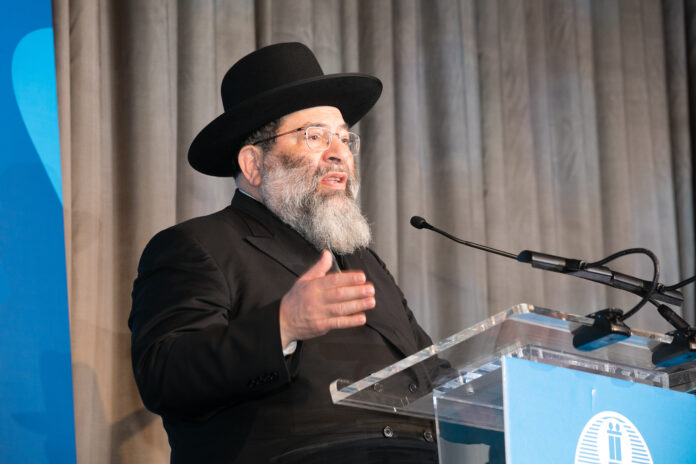
| September 25, 2025In memory of Rav Doniel Lehrfield, Rosh Yeshivas Bais Yisroel

We learned from him that Torah comes before comfort, before excuses, before anything else. Yet he often said that when he built the yeshivah, his intention had never been to have “finished products” coming in. The Rosh Yeshivah wanted to take coal and polish it into diamonds. He shook the walls with his shiurim, but just as fiercely defended his talmidim.
My dear son,
ITwas so sudden. So unexpected. This past Shabbos we lost my rebbi, the Rosh Yeshivah, Rabbi Doniel Lehrfield ztz”l. You are only nine years old now, and I had hoped we’d be able to experience together the lessons, guidance, and love from the Rosh Yeshivah for many more years. But Hashem had other plans.
As I sit here waiting for my flight to Eretz Yisrael, on my way to be menachem avel the Rosh Yeshivah’s family, I feel compelled to attempt the almost impossible task of capturing even a small piece of who he was. I owe my life to the Rosh Yeshivah — and in turn, you owe so much of who you are and who you will become, to the Rosh Yeshivah as well. This is not a letter just for you, my son, this is an open letter for Klal Yisrael, to get the smallest glimpse of the rosh yeshivah who sat quietly and learned in yeshivah but was larger than life in every way.
The Rosh Yeshivah’s hasmadah was insatiable. We saw it everywhere: the Rosh Yeshivah walking with a Gemara in hand in the mornings, at the dinner table, even through tefillah. After I was married, I once told an adam gadol in Eretz Yisrael that I was a talmid of the Rosh Yeshivah. He stopped and said, “Reb Doniel? He is the masmid hador!”
The Rosh Yeshivah once told me he had learned through the Ketzos over one hundred times. If you ever saw the Rosh Yeshivah’s blue Ketzos, bending like rubber from constant use, you would believe it. The Rosh Yeshivah shared this not to boast, but to show us what was possible when one truly attached themselves to Torah.
For decades he was in the beis medrash from literally dawn until late at night, his eyes fixed on a Gemara, lips moving softly as he reviewed. On his table sat a small sign: “Time is precious, please be brief.” He didn’t cloister himself in an office, he sat at the front of the beis medrash day in and day out, learning with the oilem. Even when fundraising trips took him abroad, he would return straight from the airport without resting or eating, to the yeshivah, unwilling to lose a moment of a single seder. He also did everything in his power to schedule his trips around bein hazmanim, even though that meant losing out on his opportunities to rest and recharge, because any minute of bittul Torah was too painful for him.
When he was in his thirties he began a shiur on Shev Shmatsa; he said he learned it 100 times before he started giving shiur on it.
The Rosh Yeshivah’s seforim collection is known to be one of the largest in the world, numbering in the tens of thousands. But he wasn’t a collector — he learned each one, knew them intimately, his thirst for Torah was unquenchable. Other roshei yeshivah were in awe of how he approached learning the same masechta over again with absolute excitement, always looking for a chiddush in the sugya.
He walked the streets of Yerushalayim early every morning for exercise, sefer in hand, somehow avoiding lampposts and curbs without ever looking up. The residents would watch in awe as he exemplified the blend of hasmadah and taking care of one’s health all at once.
Even sickness did not stop him. After a heart procedure, the doctors cautioned that he would need to rest at home for close to a month. Instead, he moved into the yeshivah building so he could continue giving shiur from his bed, the bochurim all crowded around him. In another instance, the day after hernia surgery, when everyone assumed he would take a day off, he walked into the beis medrash in great pain, lowered himself into his chair with effort, and delivered an extremely intricate shiur. We learned from him that Torah comes before comfort, before excuses, before anything else.
The Rosh Yeshivah was an imposing figure to a fresh “Bais talmid” as we were called. You could feel in the air when the Rosh Yeshivah was in the room; he radiated a palpable energy. It’s important to note though, he was not born into greatness. He worked hard for the incredible heights he attained.
He grew up in Chicago as a regular American boy — athletic, popular, well liked at Skokie Yeshiva. But already by the age of 15, his hasmadah was making waves. He became a talmid of Rav Chaim Zimmerman, who remained his rebbi muvhak for 25 years. At 16 he traveled across the ocean to Eretz Yisrael to learn in the Mir. Later, he returned to the United States, where he married his devoted Rebbetzin Yehudis, the daughter of Rabbi Shlomo Yosef Chill — a Mir talmid, rav, and a close aide to Rav Aharon Kotler and Rav Yitzchak Hutner.
When he was 28, he and his rebbetzin made the incredibly hard decision to leave behind the comfort and familiarity of New York and moved permanently to Eretz Yisrael, at a time when such a move meant real sacrifice. There, he learned under Rav Chaim Kreiswirth and taught in Yeshivat Hanegev under Rav Yissachar Meir. For ten years he remained there all week, returning home only for Shabbos, giving everything he had for Torah.
In 1982, he cofounded yeshivas Toras Moshe and in 1985, he founded Yeshivas Bais Yisroel — first in Bayit Vegan and later moving to Neve Yaakov — where thousands of talmidim would be shaped. That yeshivah was not built from bricks and stone, but from his and his rebbetzin’s total mesirus nefesh, from every ounce of energy he poured into Torah and talmidim.
For the last three years I was in yeshivah, I was zocheh to be the Rosh Yeshivah’s chavrusa (no doubt to keep an eye on me). A handful of times, the Rosh Yeshivah spoke about the inception of the yeshivah and he made it clear that his intention had never been to have “finished products” coming into the yeshivah. The Rosh Yeshivah wanted to take coal and polish it into diamonds. And polish us he did. The Rosh Yeshivah believed deeply in Chazal’s teaching: s’mol docheh v’yamin mekareves — let the left hand push away while the right hand draws close. You did not want to cross the Rosh Yeshivah; that fire I spoke of could burn.
Yet beneath it all, there was never a doubt that it came from love. The way the Rosh Yeshivah lit up a room with his smile and laughter, the way the Rosh Yeshivah would ask, “So, how are you?” before beginning to learn — the Rosh Yeshivah was every bit a father, guiding us, holding our hands.
His care was practical and real. When a young couple in yeshivah had their first child far from family, balloons arrived at the hospital from the Rosh Yeshivah. The same man who could shake the walls with a fiery shiur also remembered loneliness and knew how to bring joy. Together with the rebbetzin, he treated every member of the staff with respect and love. Famously, salaries were always paid on time, even during Covid and the war months, no matter what was happening. He said often that the staff was family, and he lived that truth.
The Rosh Yeshivah’s anivus was extraordinary. His humility was apparent in the way he constantly learned with bochurim throughout the day, listening to them as if he was listening to a fellow gadol baTorah, despite the young bochurim not even being in the same stratosphere when it came to learning. He didn’t pick out the best or brightest, it was whoever was around, whoever didn’t have a chavrusa, whoever needed one. One former chavrusa reminded me about the Rosh Yeshivah’s mind-boggling hakaras hatov. How he always thanked his chavrusas for learning with him, praised them, told them he’d never learned the sugya so thoroughly, listened to every question with utmost concentration and patience. He would compliment us to the moon over a simple svara. Even before we’d begin our chavrusashaft he would inquire after my well-being, remember things that I’d mentioned previously — things you’d never think a busy rosh yeshivah would remember or care about.
He would relate to each bochur differently, depending on what he intuitively sensed that bochur needed. Once a bochur was walking around the yeshivah with his shirt untucked, a big no-no in Bais Yisroel because the Rosh Yeshivah firmly believed that dressing like a mensch was a springboard for taking oneself seriously and committing to real growth. The Rosh Yeshivah sensed this bochur was a sensitive soul, he was also a Kohein. The Rosh Yeshivah walked over and began with, “You know, you are much more kadosh than I am.” He spoke to the bochur at length regarding his kehunah status, how grateful he was to have him in the yeshivah and so on, and only then mentioned, that because of his inherent kedushah, it would be befitting to tuck in his shirt.
Once there was a bochur in yeshivah whose suit was clearly nearing the end. The boy’s family was in difficult financial straits and the mashgiach gently mentioned that the student fund would cover the cost of a new suit. But the bochur refused, embarrassed. The Rosh Yeshivah called him over a few weeks later and told him that, with all his sons getting married and leaving the house, the rebbetzin was at a loss as to what to do with the suits they had outgrown, in excellent condition, taking up room in the closet. He asked if maybe the bochur could take one off their hands. And he did.
One friend told me that when he had no one in the world, no one who truly understood the depth of his pain, the Rosh Yeshivah was there for him. He made more time for him then any rebbi, any friend, even though his schedule and his time was so much more precious than it was to practically anyone else.
He would lose sleep when bochurim shared some of their burdens with him. He once got wind of the fact that a talmid was struggling to get a geshmak out of his learning. He tossed and turned all night, calling him the next day to discuss how he could help remedy the situation.
The Rosh Yeshivah was in many ways a father to the thousands of talmidim he raised. We are taught that each of us has within our DNA the middos of the Avos Hakedoshim. This isn’t physical genetics — it is passed down through rebbeim, who shape us through that mesorah. The Rosh Yeshivah was no different. The Rosh Yeshivah changed everything for me.
When I think about the Rosh Yeshivah’s life and what he gave me, I see him reflected in the Avos themselves: Avraham, Yitzchak, and Yaakov.
Avraham Avinu stood alone against the world, unshakable in his fight for the will of HaKadosh Baruch Hu. The Rosh Yeshivah lived the same way: What you wanted was irrelevant — the only question was what Hashem wanted. His conviction was legendary, a burning fire. He roared like a lion in defense of a svara and just as fiercely in defense of his talmidim, always seeing not just who we were but who we could become.
The gevurah of Yitzchak Avinu also flowed through him. Excuses were foreign to the Rosh Yeshivah. I cannot recall a single day he was in town when he did not give shiur. We knew the stories from Yeshivat Hanegev — how he would leave his young family for the week and return only for Shabbos. His devotion feels unimaginable today. Anyone who was his chavrusa can picture it: Exhaustion pulling at him as he fought to stay awake, only to rest his head for a moment on his sefer and seconds later continue the very sentence he had left unfinished. His focus was singular — to do what was right, no matter the cost. That was his gevurah — not stubbornness, but unshakable commitment to Torah and avodas Hashem.
Above all, I see the trait of Yaakov Avinu, ish tam yoshev ohalim. Nothing besides Torah mattered. Torah — and our growth in Torah — was his lifeblood. He believed in me even when I was young, entrusting me with responsibility far beyond my years. He taught me that when you attach yourself to true mesorah and immerse in Torah with emes, nothing is impossible. And I know I am just one of thousands to be taught these lessons.
The Rosh Yeshivah was close to many of the present-day gedolim, including Rav Baruch Dov Povarsky, Rav Avraham Yehoshua Soloveitchik, and Rav Shaul Alter. He had many prestigious acquaintances and admirers but the Rosh Yeshivah never sought honor. Even though he authored tremendous works, including close to 40 volumes of Binas Doniel on Shas, and Chemdas Doniel on halachah and aggadah, his humility was even more expansive.
Others recognized his greatness, too. Rav Dov Landau recently heard the name “Lehrfield” and immediately asked if it was connected to Rav Doniel. When told yes, he replied: “I know him from his seforim. He is a gaon, a talmid chacham. Please ask him to come visit me.” But when the message reached the Rosh Yeshivah, he only smiled and said: “It would be nice to meet Rav Dov, but I simply don’t have the time. I have so much more I need to learn.” That was who he was — never seeking honor, he was a tremendous anav, only desperate to learn more Torah.
The Rosh Yeshivah often reminded us that a yeshivah is not only a place to learn Torah — it’s a place to learn how to learn. He showed us how to see the full picture of a sugya, how to connect it across masechtos, to examine each Rishon and Acharon carefully — the Ramban, the Pnei Yehoshua, Rav Akiva Eiger, the Ketzos — and to appreciate the mehalech of Rav Chaim and Rav Baruch Ber. And when the pieces came together, sometimes he would break into song, and the whole shiur would sing with him. Torah was his life, and he made it our life, too. Hats and jackets during davening, the dignity of tefillah and the tzurah of the yeshivah, mattered very much to the Rosh Yeshivah — there was no room for flexibility there. But he was also balanced. On a sweltering Yom Kippur when the air conditioning broke, he told everyone to remove their jackets. He was always making a cheshbon, always weighing what was best.
Every Simchas Torah when the Rosh Yeshivah came to Chicago, the Rosh Yeshivah stood beaming, looking out at his talmidim and their children — filled with nachas like a grandfather surrounded by generations. When I told you, my son, the news of the Rosh Yeshivah’s petirah, your first reaction was, “So we won’t see him this Succos?” No, not in the way we used to. But know this: In every action I take — and in every action thousands of his talmidim take — it is with the Rosh Yeshivah’s guidance ringing in our ears. The Rosh Yeshivah is still urging us forward.
Friday morning seder was the most important seder of the week to him. As always, the Rosh Yeshivah modeled by example. He came that last Friday, he came to yeshivah as usual. An old talmid came to visit, and before they began learning, the Rosh Yeshivah asked if he had eaten breakfast. When he said no, the Rosh Yeshivah insisted he go eat first. That was the blend of hasmadah and sensitivity that defined him until the very end.
As the sun set over Yerushalayim and Shabbos descended, during the sacred moments of bein hashmashos, the Rosh Yeshivah’s neshamah returned to its Maker.
I can still hear the Rosh Yeshivah’s voice when delivering divrei hisorerus in Elul, reminding us that every Elul Hashem sends something to shake us awake. This loss must be such a wake-up call. If we can fill the void even a little, if we can become the next generation that carries forward the traits of the Avos Hakedoshim that the Rosh Yeshivah embodied — conviction, gevurah, and Torah — then b’ezras Hashem we will be zocheh to see Mashiach very soon.
If I’m zocheh to have this as my legacy, you will have it as yours too.
Love, Tatty
Rabbi Avi Schwartz is executive director of Mechinas Ner Naftali. Special thanks to the many former and current talmidim and rabbanim of Bais Yisroel who shared their memories of the Rosh Yeshivah.
(Originally featured in Mishpacha, Issue 1080)



No comments:
Post a Comment