He was the greatest and most influential leader of the ultra-Orthodox-Sefardi world, the one whose door the heads of state knocked on, who amazed with moderate and progressive rulings, but who always found time for ordinary people and did not hesitate to lash out at those who angered him.

May 1949. Night. Suddenly, there was a loud knock on the door of the head of the Ahava Ve'Avva Yeshiva in Egypt, Rabbi Ovadia Yosef. Immediately afterwards, Egyptian detectives burst into the rabbi's home with drawn pistols and demanded that he hand over the weapons he had. The rabbi, nonchalantly and wisely, led the detectives to the bookcases and told them: "Here, gentlemen, this is my weapon." Fifteen months before this event, the rabbi had visited the palace of the Egyptian King, Farouk, in honor of the king's birthday. This did not help the rabbi a few months later, when he was arrested on suspicion of spying for Israel during the War of Independence. The rabbi said about this in the past: "They began to suspect me of being an Israeli spy. Every now and then, at a surprise time, the Egyptian intelligence officers would come searching me. After that, the Egyptians began to spread rumors that I was engaged in Zionist propaganda and came to me with claims that I was speaking in Hebrew. The truth was that I was really preaching to the worshippers to do everything they could to immigrate to the Land of Israel through Italy and France. As for the Hebrew language, I told the Egyptian authorities: 'My lords, I speak in the language that God, the Blessed, gave to the people of Israel.'"
These modest anecdotes seem to be enough to teach who and what Rabbi Ovadia Yosef was, who passed away a decade ago. He was a pioneering rabbi whose life and rulings were intertwined with the development of the state, a leader of his generation, and in his lifetime he served as one of the strongest and most prominent pillars of the spiritual world; and he was one who, with his wisdom, rulings, and extensive activities, changed and developed the spiritual world from end to end, creating and laying the foundation stone for those who came after him.
On October 18, which is the rabbi's Hebrew death date, 3rd of Chashvan, and on October 19, a two-part documentary by Ofer Pinchasov, "King of the Sephardim," will be screened, revealing new personal details about the life and experiences of Rabbi Ovadia, whose spiritual, religious, cultural and social influence - both on the Haredi and secular worlds - was groundbreaking, unusual in real-time and liberal, and shaped the face of Israeli society in general, and Sephardim in particular - forever.
"His outlook on life made him a pioneer," claims his personal assistant Zvi Hakak. "Even as a little boy, he saw and experienced ethnic discrimination and understood that in order to make a change, you need power. He set a goal to be a leader and gain power not for himself but to make changes. His thought was always how to help others. He didn't think about himself but thought about creating a better place and improving life around him. The first thing the rabbi taught me was to use time efficiently. There was no one who knew how to use time like him. Another thing was his attitude towards people. When I accepted the position, one of the first things the rabbi said to me was: 'Listen, when people contact you and want to come to me, if rich people or politicians and powerful people call you - you can brush them off and reject them, but if a simple person, a sick person or a person in trouble calls you - these are the people you need to make an appointment with me right away, without delaying, but making it as easy as possible for them.' He would take to heart every visit from people and would remember faces and care about the condition of the people he greeted and was interested in. Gratitude was also one of his best qualities. Even in his last days, he made sure to thank me for taking care of him, taking care of him, and helping him."
In the Haredi world in this century and the previous one, there has not been a figure as revered, valued, sweeping, groundbreaking, and influential as Rabbi Yosef, both because of his unique and humane personality as a spiritual leader and later a political leader of Shas, and because of the progressive modernity and humanity he demonstrated in his innovative opinions and rulings that shattered the glass ceiling of the old world.
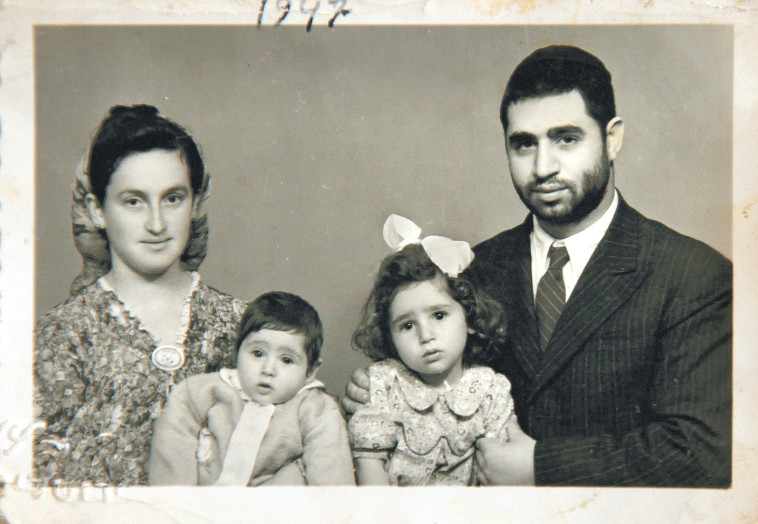
Rabbi Ovadia Yosef was born in 1920 to Jacob and Georgia Ovadia, cousins, in Baghdad. He was named as a tribute to his grandfather Ovadia, in memory of the late Hacham Abdullah Somekh, and in tribute to the late Hacham Yosef Chaim. When he grew up, he changed his middle name to his family name. In 1924, the family immigrated to Jerusalem and lived in the Beit Israel neighborhood. "Father was a poet and a gold and silversmith. When we immigrated to Israel, Father opened a grocery store," he said in an interview in 1972. "The economic situation was mediocre."
"Average" was a compliment. The family's precarious financial situation led Ovadia to work at a very young age. At the age of 7, he began his studies at the Bnei Zion Talmud Torah in the Bukharim neighborhood, and immediately stood out. "There is an amazing story about how the family had no choice and young Ovadia's father asked him to sell in a grocery store, and then two of the most senior rabbis in Jerusalem, Rabbi Ezra Atiya and Rabbi Yaakov Hadas, came to the store, put on work aprons and told Ovadia's stunned father: 'We have already studied, but your son will be older than us, so it is better for him to study and not us,' and they replaced him," says Itamar Edelstein, author of the book "Beit Yosef" (in collaboration with Rabbi Yosef's daughter, Rivka Chikutai).
Edelstein continues: "The family's financial hardship was very great. One day before Passover, there was a rush at the grocery store, and Ovadia's father asked him to go and help with deliveries, but that evening he had to finish a tractate he was studying, so he told his father: 'It's almost time, I have to finish the tractate first.' His father took the things himself, gave him a ringing slap in the face, and sent him to sleep that night next to a truck wheel in the street. He grew up in a tough and very demanding home, but his parents, especially his mother, believed in him very much."
At the age of 9, Ovadia wrote his first literary work - notes in the margins of the Kabbalah book "Rashid Hochma". His friends from that period testified that even in his early childhood, he would not go out to play during breaks, but would summarize the lessons again and review the material learned. In 1931, his father traveled to Baghdad for business purposes, and Rabbi Yosef joined him on the trip, and went to the Beit Zalika Yeshiva. In the exam he passed with the head of the yeshiva, the Gaon Rabbi Salman Hogi Aboudi zt"l in oral Gemara, the Gaon said to the 11-year-old Ovadia: "You will be one of the judges of Israel, the greatest of the generation!" Two years later, he moved to the Porat Yosef Yeshiva in the Old City, where he already wrote the book "The Notebook for Copying Puzzles" together with two of his friends.
Upon reaching the age of 17, he began to teach Torah lessons and teach halacha and morals at the Ohel Rachel synagogue in the Ruhama neighborhood of Jerusalem. This period was very formative and significant in shaping Rabbi Yosef's character and personality, as in his lessons he often disagreed with the laws of Chacham Yosef Chaim, who was strict in his approach, and preferred the rulings of the Ari over that of the Shulchan Aruch. This approach led to resentment among his listeners and he also received criticism from various rabbis, but with the encouragement of Rabbi Ezra Attiya, the young Ovadia continued on his path.
In 1940 he was ordained to the rabbinate and to the Jewish community by Rabbi Ben Zion Meir Hai Uziel, and from 1945 to 1947 he served as a Jewish judge in the Sephardic Jewish community court in Jerusalem. In 1944 he married Margalit Fatal, the 17-year-old daughter of Rabbi Avraham Fatal, one of the well-known matchmakers in Syria. “Margalit immigrated to Israel from Aleppo, Syria, and her uncle had a shop in Jerusalem,” Edelstein says. "At a certain point, her father and older sister decided to match her with Rabbi Yosef, and her sister asked her to go and help her uncle in the store. Ovadia and her father were present at the store, and at the end of the meeting, they asked Margalit: 'How is the client?' She said: 'Fine,' and didn't understand the meaning of the question, until her aunt and sister told her that they wanted her and Ovadia to go out together. They met, and at a certain point Ovadia came to her house, and throughout the entire meeting Ovadia talked to her father and not to her, and this made her very angry, and at a certain point she wanted to call off the engagement, and went to her room nervously.
Then Ovadia, in a very unusual move, followed her to her room and said to her: 'I have something to tell you: I promise you that if you take care of me in this world, I will take care of you in the next world.' After he said this sentence, she went to her father and told him: 'I am marrying him.' After that, there was an argument between the families about the dowry, because his poor family tried to take some money out of her family, and it exploded, and her father decided that she would not marry Ovadia because of this. Margalit was very upset and was sitting at Shabbat dinner crying, when suddenly her young nephews shouted to her, 'Ovadia is coming, Ovadia is coming.' She could not believe her eyes. Ovadia went to her and said to her: 'Listen, the matchmaker is doing what he has to do, but I decide and I don't need the dowry, I want us to get married anyway.' That's how it happened."
The couple's wedding took place at the Spitzer School, which was located in the Yehudioff-Haftez house in the Bukharim neighborhood. "Rabbi Ovadia had style and was the ultimate romantic," says Edelstein. "For years, he was bothered by the fact that he didn't have the money to buy her gifts, to the point that when his two daughters were born, he celebrated it with a stout beer. Later, when he did have money, he went to a jeweler and made two silver roses for Margalit, gave it to her as a gift, and told her: 'I haven't bought you flowers for decades, so now I'm buying you flowers that you'll always have.'"
In January 1945, the couple's first daughter, Rebbetzin Adina Bar-Shalom, was born, later the founder of the Haredi College in Jerusalem and recipient of the Israel Prize for Lifetime Achievement. "After Adina was born, they celebrated Shabbat at home and prepared Tevet, according to Rabbi Ovadia's explanations," says Edelstein. "In the middle of the night, they hear that their home has been broken into, check that the girl is okay, and see that the thief took nothing because the house was sparse and empty. He only took one thing, the pot of food. They left the house following the smell and saw that the thief had thrown away the contents of the food and taken the pot. That was how severe the young couple's financial hardship was."
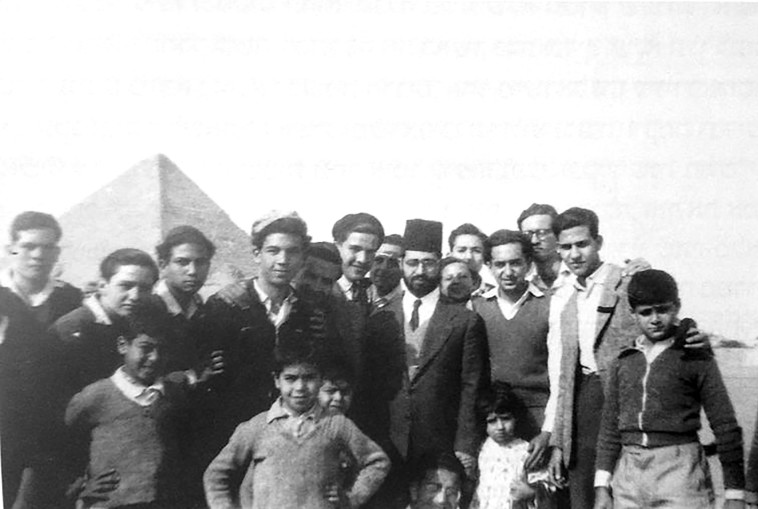
In 1947, Rabbi Yosef moved to Egypt, at the request of Rabbi Uziel, in order to strengthen the commitment of the Jewish community there. "In my opinion, everything begins and ends in Egypt. Egypt is Rabbi Yosef's Archimedean point, and this is also what made him, in my opinion, different from any other rabbi," claims Edelstein. "The chief rabbi of the Jewish community in Egypt was already very old and they needed a deputy rabbi. The ones who recommended Rabbi Yosef were Rabbi Yitzhak Isaac Halevi Herzog (grandfather of President Yitzhak Herzog - D.P.) and Rabbi Attiya. Ovadia's family was madly opposed because it was before the outbreak of the War of Independence and before the declaration of independence for the State of Israel, but Rabbi Yosef decided to take the position, he took his family and arrived by train in Cairo. Cairo is a microcosm. Rabbi Yosef arrives to be the de facto rabbi of the community and he encounters political situations and crises there. He was 'a bit' an ambassador and there were even attempts to assassinate him. "Once, the Egyptians even ordered him to dismantle a Sukkah he had erected during Sukkot because they thought it was signaling the way for Israeli planes. He made pro-Zionist speeches there to encourage immigration and remained there until 1950. When he left Egypt, he took a ship to Italy and from Italy arrived in Israel."
What was special about his stay in Egypt from a rabbinical and Torah perspective?
"He worked with the community committee and with the people and learned how to reach people, how to talk to them, learned the challenges of the time and learned to 'turn a blind eye.' His way of ruling was shaped there, including in places where he said, 'I know it's forbidden, but I went to look for ways to permit it or I turned a blind eye.' That is, there are cases in which he understood the situation he found himself in and what is not permitted in Israel can be permitted in Egypt - and vice versa."
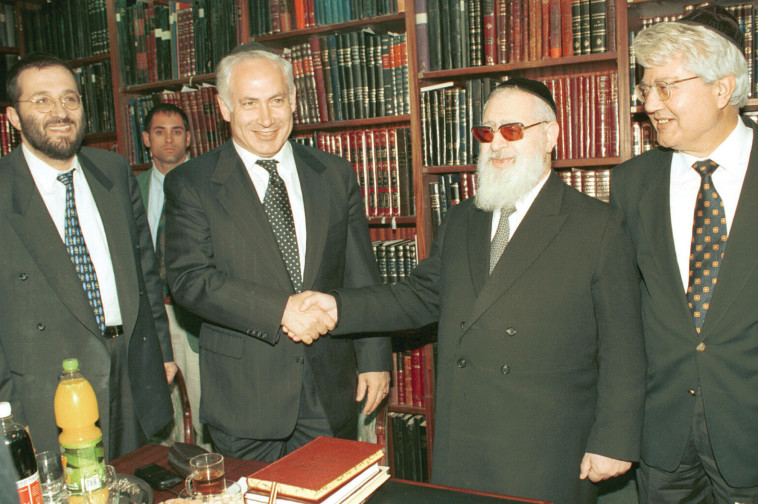
Years would pass, Hosni Mubarak would be appointed president of Egypt, and the relationship between the country and Rabbi Ovadia would grow stronger. Aldstein: "They exchanged letters, and even Benjamin Netanyahu used Rabbi Ovadia in certain cases to communicate with Mubarak. It was a very special relationship." In 2010, when Mubarak's health deteriorated, Rabbi Yosef wrote to him: "May you be blessed to continue to lead all the residents of your country with pride, strength, and might, throughout the days and years of life and peace." Mubarak responded by thanking the rabbi for his wishes and wrote to him in a letter that Netanyahu forwarded to the rabbi: "Dear friend and great Rabbi Ovadia Yosef, head of the Rabbinical Council, State of Israel. I thank you for your kind letter."
Upon his return to Israel, he returned to the stressful life that characterized him before the trip. Edelstein: "He really wanted to publish the first volume of his book 'Yabia Omer,' but the printing house wanted 200 liras from him to print it, money he didn't have. He came home, sat on the armchair, and cried. His wife Margalit asked for an explanation for her frustration, and he told her: 'Because of 200 liras, my Torah will not be published.' He was 200 liras away so that he wouldn't be the Rabbi Ovadia Yosef that we all know. In those days, Margalit began to save money and every time she received chocolate allowances, she would exchange them for money and save penny after penny, and hide the money under the mattress, when her ambition was to buy a wardrobe. In a moment's decision, she told her husband: 'I saved money for you.' She went to the mattress and brought him the money. She gave up the wardrobe for him and didn't tell him at first where the money came from. Later, he found out and since then he has dedicated all his books to her for the kindness she had done. "It was the book that launched him into the Torah world, won approval from all the senior rabbis, and that's what paved the way for him. He couldn't find a job as an educator and needed a way to break through - this was his big breakthrough and turned him from a person with no connections, who didn't have anyone in his family to open the door to the rabbinical world - into someone who managed to pave his own way. This book, which is still sold today, put him on the map."
"Yabia Ommar" in its 11 volumes (and an additional key volume) is considered Rabbi Yosef's main and most important work, and earned him the Rabbi Kook Prize for Torah Literature in 1954, the Rabbi Toledano Prize for Torah Literature in 1977, and the Israel Prize for Torah Literature in 1970. The 11th volume was prepared for printing by him, but he died before completing its editing. His students and family worked to have it published in 2018. Over the years, over 50 of his books have been published.
The book, in its many volumes, is the best testimony to Rabbi Ovadia's groundbreaking and permissive approach. In "Yabia Omer" were sown the seeds that sprouted in Rabbi Ovadia's halachic ruling that members of Beta Israel, Jews of Ethiopian descent, are Jews for all intents and purposes. This halachic ruling paved the way for the application of the Law of Return to Ethiopian Jews.
A revolutionary and very famous ruling was the permission for the agunot of the Yom Kippur War martyrs. Edelstein: "Those young women whose husbands were absent due to the war came to his living room, and Margalit his wife received each and every one of them, spoke with them and cried with them. Just before each of the 900 agunot was to enter the three rabbis, of whom Rabbi Yosef was one, Margalit wrote down on a note everything that each one had said to her, and passed it on to Rabbi Ovadia. Thanks to those details, he was able to allow a large part of the agunot. At the end of the night, when Ovadia and Margalit put the children to bed, they sat in the kitchen and cried from the stories. Serious crying. He was a very emotional person and tended to cry often."
In general, Rabbi Ovadia's approach was "the power of a greater is better." That is, where there is no obligation to be strict, one should make things easier for the public and allow certain things. He also sometimes ordered that other things be turned a blind eye. The Rabbi himself blamed some of the strictness on rabbis who did not study enough, and therefore always take things more seriously. "It is important to have a rabbi who will rule according to the halacha, and not just about everything that is forbidden and forbidden," he said in the past. "Only someone who studies Torah properly will have the power to allow when the halacha does indeed permit, this is the power of a greater is better."
In the context of the sale permit during the Shmita year, the rabbi ruled that land may be sold to a non-Jew, in order to make it easier for the people to purchase fruits and vegetables despite the prohibition. He permitted listening to women's singing on the radio or CD, when the listener does not know the singer and does not know what she looks like (although regarding appearance, he ruled later that there is room for leniency here too), but watching a live performance of women's singing is completely forbidden. The rabbi also ruled that brain death is death for all intents and purposes, and also ruled that it is permissible to use the Internet (kosher) with caution for livelihood purposes.
Incidentally, in 2018, the rabbi's grandson, Ovadia Cohen, made headlines when he came out of the closet and married his partner, Amichai Landsman. Over the years, his grandfather has spoken out strongly against the LGBT community, calling its members "vile, disgusting people." None of the Yosef family attended the wedding.
"Yabia Omer" was a success and Rabbi Ovadia began to advance. In 1953, he founded Or HaTorah, a yeshiva for outstanding Sephardic avrechims, and later established additional yeshivahs with the goal of producing Sephardic Bnei Torah who would form the backbone of Torah leadership for the future generation; from 1958 to 1965, he served as a dayan in the Jerusalem Regional Court; from 1964 to 1968, he served as head of the Mativitta Gedolah Yeshiva; in 1968, he was elected to serve as Chief Rabbi of Tel Aviv, and served in the position alongside Rabbi Shlomo Goren starting in 1971.
The collaboration between the two accompanied one of the affairs that stirred the country in 1970 - the "Helen Seidman affair." Seidman (in a humorous way) was a non-Jew from the United States who came to Israel in 1964 with her young daughter. Although she arrived as a tourist, she fell in love with the country and began working as a genetics expert at Kibbutz Nahal Oz. She met kibbutz member Binyamin Seidman and married him in a civil marriage in Mexico in 1967. That same year, she converted to Judaism in a Reform court in Tel Aviv. The Ministry of the Interior refused to register her as Jewish in the population registry, due to the fact that she had not converted within the framework of the Chief Rabbinate. In 1970, she appealed to the High Court of Justice, and out of fear that the court would accept her conversion and bypass the Chief Rabbinate, Rabbi Goren approved her conversion within 24 hours. Due to the Chief Military Rabbi's lack of authority to convert, the conversion was not recognized. This is where Rabbi Ovadia came into the picture, approving Seidman's conversion, despite strong opposition from Rabbis Kanievsky and Sach.
In 1972, Rabbi Yosef was elected Sephardic Chief Rabbi of Israel ("Rishon LeZion"), and during this period he issued most of the significant rulings mentioned above, which were influenced by the atmosphere prevailing in the country around the Yom Kippur War. After the war, the political upheaval of 1977 arrived, and the Rabbi turned to his close friend, the new Prime Minister, Menachem Begin, and alongside the blessings he wrote: "I strongly request that His Honor exercise his great influence to continue the National Insurance allowance for the first and second child in the family and to reject with all hands the proposal to cancel the aforementioned allowance." Rabbi Begin also requested financial support from the high yeshivahs.
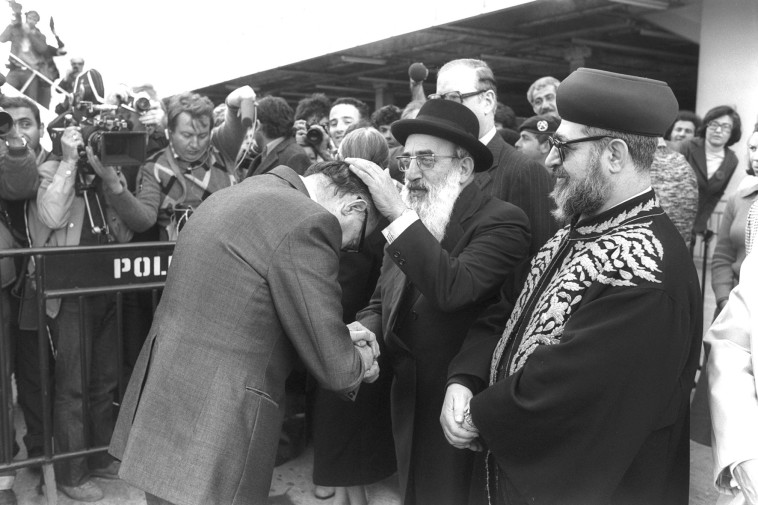
The warm relationship was strengthened on March 22, 1979, when Rabbi Yosef sent a personal letter to Begin on the eve of the signing of the peace treaty with Egypt: "Since I am unable, for health reasons, to go tomorrow to accompany His Excellency as he leaves for the United States to sign the peace treaty with the largest of the Arab countries, Egypt, I would like to express my heartfelt condolences and blessings from the bottom of my heart. Indeed, it is true that the heart aches and grieves over the great price that was paid in exchange for peace, the removal of our settlements, and the return of natural treasures and military bases to Egypt, and the heart is also anxious about what is to come. Above all, peace is great, and his strength is justified by his wisdom, his fortitude, and his courage, which he did his best to bring about the peace treaty, because God, the Blessed, has found no vessel that can hold a blessing for Israel other than peace."
The blessings were also accompanied by a shocking halachic ruling: "If the heads and commanders of the army, together with members of the government, determine that there is a concern for life in the matter, that if territories are not returned from the Land of Israel, there is an immediate danger of war from the Arab neighbors, and if the territories are returned to them, the danger of war will be removed from us and there are chances for lasting peace, it seems that by all accounts it is permissible to return territories from the Land of Israel in order to achieve this goal, that you have nothing that stands in the way of concern for life."
The above-mentioned halachic ruling caused a stir among Rabbi Ovadia, the settlers, the rabbis, and even his co-regent, Rabbi Goren. Rabbi Ovadia explained that the 1945 war "contributed" to his ruling: "Can we afford to have Israeli blood spilled like water? In the last war, about 3,000 people were killed. Why should we bring another war and another war upon us? I personally knew many of the fallen. Why send more young people into battle? Halachic law does not prohibit withdrawing from territories for the sake of peace. One soul of Israel is worth all the territories. We all value the commandment of settling the Land of Israel, but it would be unthinkable to abandon souls in Israel for a piece of land."
In January 2003, in the midst of the second intifada, the rabbi announced that the halachic ruling was no longer valid: "The halachic ruling that I gave at the time - territories in exchange for peace - is not valid at all in light of the current situation. I meant only true peace. However, now our eyes see and understand that, on the contrary, giving up territories from our holy land causes danger to lives. We did not wish for such a peace, we did not pray for this boy. Therefore, the Oslo Accords are null and void. I do not go back on what I announced at the time, because for peace with real security it is worth giving up territories. Every Jew is worth a whole world, every Jew. This is my opinion on the Torah."
In 1983, Rabbi Ovadia Yosef's term as Chief Rabbi of Israel ended. During that time, he was a co-founder of the party that would change the political map of Israel over the past 40 years: Shas, the World Association of Sephardic Torah Observant Jews.
"In 1979, I founded the first Haredi school for girls, and in 1981 I tried to get a plot of land to expand the school. For a year I tried to get permission for this, but in the end the official from the municipality I dealt with about it, from the Alignment party, told me that it was a political cake that I was not a part of because I had not been a part of political life until then," says Rabbi Nissim Ze'ev, the main founder of Shas. "I decided to establish the party of Sephardic Judaism. I realized that if everything works in politics like this - I would be a politician. That friend from the Alignment told me that it was impossible to establish a party and gather an audience of voters in a year, but I was determined. I returned home upset and decided to establish an association, the Association of Sephardim Observant Torah, and to run in the elections for local authorities in Jerusalem.
"I began recruiting founding partners, led by Yaakov Cohen and Shlomo Dayan. We did field work to get voters on board with us, but I didn't yet approach the rabbis because I knew they would be hesitant to join me. I assumed that as soon as I gained public support, the rabbis would join. We started with 15 activists, and in less than a year we reached 1,500 activists in Jerusalem alone. After six months, when we had accumulated sufficient public support, we approached the rabbis, and in the end we approached the three most recent and influential rabbis: Rabbi Yehuda Tzedakah, Rabbi Ben Zion, and Rabbi Ovadia Yosef."
"Rabbis Tzedakah and Ben Zion supported us, and Rabbi Yosef, who was the Chief Rabbi of Israel, could not support us at first because of his position, and he told me: 'If I am not the Chief Rabbi - come back to me.' At that time, he received a promise from the majority of Knesset members that the law limiting the term of office of the Chief Rabbi of Israel to ten years would not pass on the second and third readings, but the law did pass. In April 1983, I received his support."
Rabbi Ze'ev was placed first on the list and Yaakov Yosef, the son of Rabbi Ovadia, was placed second. The party was successful in the elections, with three seats in the Jerusalem City Council, and further success was also recorded in Tiberias. In light of its popularity, the party decided to run in the elections for the 11th Knesset, which were held in July 1984.
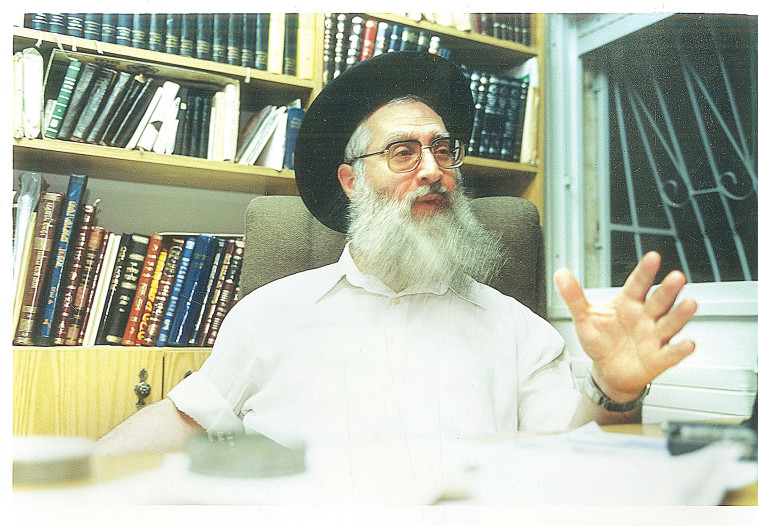
"Rabbi Ovadia had the strength and courage to carry the flag of Shas and become its decisive voice," says Rabbi Ze'ev. "On the same night that we won 3 seats in the municipal elections, I announced that we were going to establish a national movement and I would be its leader. The first question in December 1983 was whether to join a coalition with Teddy Kollek, the mayor, or not, and Rabbi Yosef decided that we would join - and so we did." This sharpened Shas as separate from Agudat Yisrael. Six months later, Rabbi Ovadia came to me at the office, along with Rabbi Peretz, who was the chairman of the movement, and several other party members, and asked for two requests: one - that I agree that the national Shas will continue as a party for the Knesset that cares for the Sephardic Haredim. The second - that I give up my candidacy as head of the party at that stage. At first I did not agree, but the rabbi invited me to his house and asked me to give up, so in the end I respected his decision and gave up the leadership of the party. The rabbi was a great man, a judge of a generation, and his name was from the end of the world to the end; on the other hand, he had humility, simplicity, and respect for every person."
Hakak: "Rabbi Yosef controlled everything, they couldn't do things behind his back. He knew how to do everything in a very short time. Of course, if there were big issues, he invested time. By and large, politics wasn't the main thing that occupied him all day. What did occupy him was the acquittal of many, and that's something that accompanied him all his life."
Rabbi Peretz served as Shas chairman until 1990, when he was replaced by someone who would take the movement to the next stage of the political game: Rabbi Aryeh Deri, who was a favorite of Rabbi Ovadia. The climax of the embrace came shortly before Deri's appeal to the Supreme Court after being convicted of bribery, breach of trust and receiving something by fraud, at the famous press conference in which Channel One reporter Nitzan Chen asked Deri a question and Rabbi Ovadia, mistakenly thinking that Chen was the journalist Matti Cohen, lashed out: "You hear there's an appeal. What do you want? It's by law. An appeal! Get out!" To Deri, the rabbi said: "Don't answer him. I order you not to answer him." The press conference exploded, and the phrase "get out" became one of Rabbi Yosef's most famous and recognizable. The rabbi later apologized to Chen for the mistaken identification.
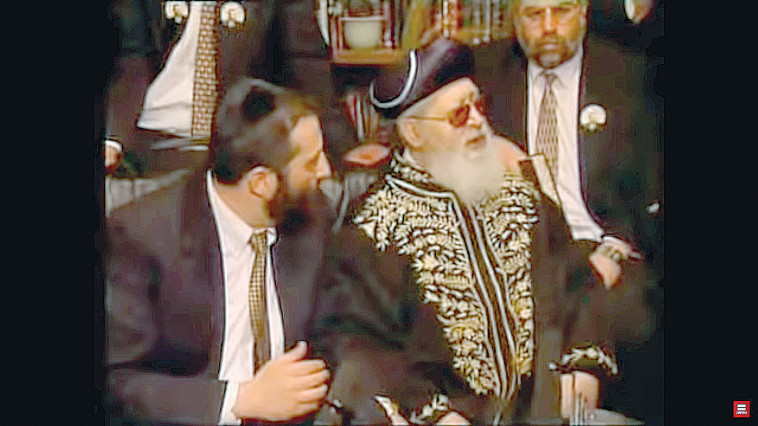
When Deri went to prison, Eli Yishai took over the party leadership and headed it until 2012. In 2014, a recording of Rabbi Ovadia from 2009 was revealed in which he referred to the possibility of Deri returning to the leadership of Shas: "If they put him at the top of our list, 30%-40% will flee to us. If I have someone honest (Yishai - DP), who does everything I tell him, how can I betray him when he listens to me in everything? They tried him (Deri - DP) in court. Why take someone who stole? Why take someone who takes bribes? Deri is too independent. How many times I talked to him, he didn't want to listen." The rabbi called Deri "evil" and claimed that he could not betray Yishay.
"Rabbi Yosef really enjoyed certain parts of the political class, he didn't suffer from the attention of senior politicians and he was very connected to some of them," says Edelstein. "He was very sensitive and overly sensitive to politics, but it was important to him to promote the rights of Sephardic Torah scholars, and so he was willing to pay the price. It wasn't always easy for him. He had a very difficult time with the Oslo Accords, because on the one hand, he gave Shas the go-ahead to take this step, and on the other hand, his support for the move led to serious demonstrations near his home by settlers and right-wingers, and he later linked it to the death of his wife, shortly after. The totality of these circumstances was very difficult for him, and so over time you could see a kind of distancing himself from political activity."
Alongside revolutionary rulings and striking humility, Rabbi Ovadia was also known for his sharp tongue and harsh statements: he opposed the conscription of yeshiva students into the IDF and voiced sharp criticism of the proposal to conscript yeshiva students for a short period, and in a 2013 class he even argued that if necessary, one should leave Israel to prevent the conscription of yeshiva students (on the other hand, he welcomed the conscription of students who did not succeed in their studies at the Haredi Nahal, and his son, Rabbi Avraham Yosef, served in the IDF as a military rabbi for about 13 years - D.P.). Rabbi Ovadia opposed litigation before the Israeli courts, since they do not judge according to Torah law, and harshly criticized the Supreme Court and called the judges "wicked", "rebellious" and "Shabbat breakers."
About Shulamit Aloni he said, "You should throw a feast on the day you die"; about Yossi Sarid he said, "Cursed be Haman, cursed be Yossi Sarid. God will bring his blood on his head and will exact revenge on him for what was done to Haman," which led to a criminal investigation being opened into his case in March 2000; during the disengagement he said about then-Prime Minister Ariel Sharon: "How cruel this evil man is, that he does such things. God will give him one 'banana' - he will die!" He will sleep and not rise!" He later regretted this interpretation and wished Sharon a long life. As is known, shortly after this statement, Sharon suffered a stroke and fell into a coma; the rabbi called State Comptroller Miriam Ben Porat "an Israel-displacer, a religion-hater"; he cursed Attorney General Yosef Harish, saying "May his house be destroyed" for deciding to put Aryeh Deri on trial; of Professor Yaakov Ne'eman, he said, "He puts on Rashi's tefillin and our rabbi is innocent, does everything, but he has cancer in his brain." He apologized to Ne'eman for this statement; in 2006, during the Second Lebanon War, he said that "soldiers are killed because they do not observe the commandments," but later stated that "every soldier you see should be kissed";
In 2009, he delivered a sermon in which he said: "The poor people who were punished in the Holocaust are the reincarnation of souls who sinned," and caused a stir. He claimed that his interpretation was not intended to desecrate the memory of the victims, but was profound and honored their memory; and last but not least, Supreme Court President Aharon Barak, was credited with the following statement from him in 2005: "A few days ago, we discussed the matter of the oppression that this government has taken from the poor. The president of this court, Barak, stood up and said, 'I don't see yet.' He has eyes and he won't see - he doesn't see that they were really robbed."
In 1994, his wife Margalit passed away, and since then, for almost 20 years - until he passed away - the rabbi was cared for by his son Moshe and his daughter-in-law Yehudit, who moved into his home and greatly influenced what was happening around him. Rabbi Ovadia and Margalit had eight daughters and five sons, and they also adopted several children over the years. In 1954, they experienced a great tragedy, when their daughter Rachel was born with a heart defect and died within three months. Edelstein: "The rabbi didn't know how to tell his children that their sister had died, so he put the empty stroller in the house, the children came in and understood what had happened. The rabbi, Margalit and the children sat on the floor and started crying, and at that moment the electricity went out in all of Jerusalem. The rabbi's children tell how that night the rabbi sat on the floor by candlelight and didn't stop crying. We are used to seeing him in a furious, angry and very political light, but behind that was a very sensitive person."
After the death of his wife, the rabbi experienced another tragedy about six months before his death, on April 12, 2013, with the death of his son, Rabbi Yaakov Yosef, at the age of only 66 after a battle with cancer. One of the moving videos filmed a few weeks before Rabbi Yaakov Yosef's death showed his last meeting with his father, who came to bless him, pray for him, and cry with him. This meeting took place after several years of tension between the two: Yaakov, who was one of the founders of Shas, held extreme right-wing views and opposed the principle of "territory for peace" that his father supported; he publicly accused several Shas representatives of forging signatures and embezzling funds, and earned a response from his father, without naming him, that this was a "complete lie"; upon the death of his mother, he did not sit in shiva at his father's house but chose to sit in his own; Rabbi Yaakov also disputed his father's rulings regarding laws related to Passover.
"In all families in Israel there are differences of opinion, that means one is on the right and the other on the left," explains Jonathan Yosef, son of the late Rabbi Yaakov and a member of the Jerusalem City Council. "In our family too, with all due respect, there were differences of opinion and there were vested interests who gradually developed it to unrelated dimensions, but in the end, family love covers up all political differences of opinion."
The rabbi's sons and daughters became influential and trailblazers in their own right: Adina Bar-Shalom founded the Jerusalem Haredi College; Rabbi Avraham Yosef was the Sephardic Chief Rabbi of Holon and a member of the Council of the Chief Rabbinate of Israel; Rabbi Yitzhak Yosef is the Rishon LeZion and president of the Council of the Chief Rabbinate of Israel; Rabbi David Yosef is the head of the Kollel Yehovah Da'at; and his son Rabbi Moshe Yosef is the head of the Maor Yisrael Institute and the head of Badatz Beit Yosef.
"I learned from my grandfather never to be arrogant, never to be nosey, even if I am in a senior position," notes Jonathan. "I learned from him to look at everyone at eye level and accept everyone with kindness. He would sit with religious and secular people and speak to everyone with the same attitude and cordiality. When he met a person, he would forget for a moment that he had a million and one things on his mind and simply invest in the person in front of him, give him friendly kisses and focus on him. He would sit with us, the grandchildren, and with our friends, and treat everyone cordially. He was more free with us because we were his grandchildren after all. He had a great sense of humor, he loved to laugh and loved life very much. He was a man, knew how to enjoy good music, a good joke and a good sentence. He knew how to have fun with his little grandchildren, knew how to make pickles, which was his hobby. He believed that one could love God with joy and not have to be an ascetic, as long as everything was done in the right way. He fought a fierce war on smoking out of concern for people's health. He was very connected and up to date with what was happening in the world. He understood the difficulties of this generation, the development of technology. He was "He could avoid a decision like whether it is permissible or forbidden to use wipes on Shabbat, but he didn't give up and wanted to address everything, even the most modern. He had a clear and orderly Mishnah with a certain line throughout his life."
Avichai Yosef, the son of Rabbi David Yosef, who serves as the director of the religious division of the Labor Federation, says of his grandfather: "He believed that you should go with what you think and not align yourself with what you are told. Ever since I was a child, I remember this situation: to rise up and overturn everything you think is wrong and go with your truth. After that came all the great revolutions he made, in the Chief Rabbinate and then the establishment of Shas, which was the real revolution in relation to all Mizrahi today."
Avichai claims that his grandfather was completely different from an ordinary grandfather: "From a young age, I knew that my grandfather was the greatest of his generation and that the only thing that mattered to him was Torah. You can't come and roll his book for him or just tell him stories about seeing a balloon or a car. That's not him. You can't do that. That's why every meeting with him, as a child, was filled with awe and respect. As I grew older, the bond between us grew stronger, and he would ask me, 'What are you studying?' He would greet me with various greetings and would always be interested in me and my studies. There were situations when on Shabbat afternoon, when I would come to his house, he would call me and my cousins, stand us up, give us cut fruit, bless us and shower us with warmth and love. He would simply melt when he saw children."
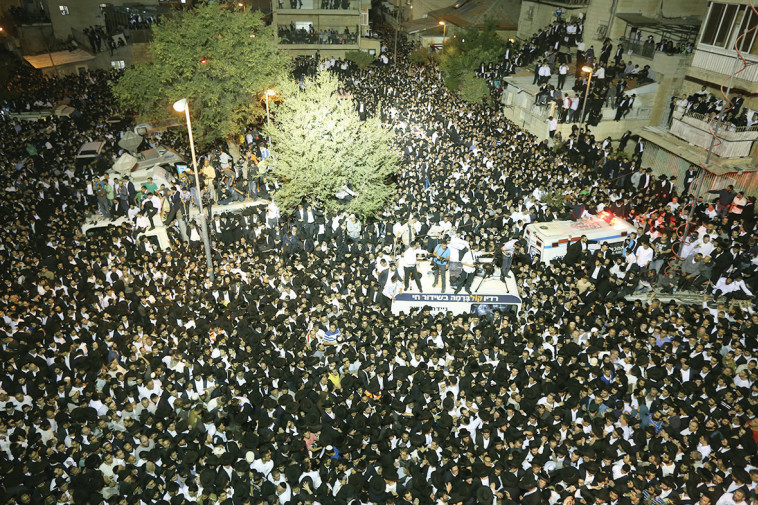
On September 21, 2013, the day of Sukkot, following the deterioration of his health, Rabbi Yosef was hospitalized at Hadassah Ein Kerem Hospital, and his family added the name "Haim" to him as a virtue for longevity. The Rabbi passed away on Monday, Cheshvan 3, 5774, October 7, 2013, at the age of 93. According to estimates, his funeral was the largest in the history of the State of Israel, with nearly 850,000 people. He was buried next to his wife in the Sanhedrin Cemetery in Jerusalem.


No comments:
Post a Comment