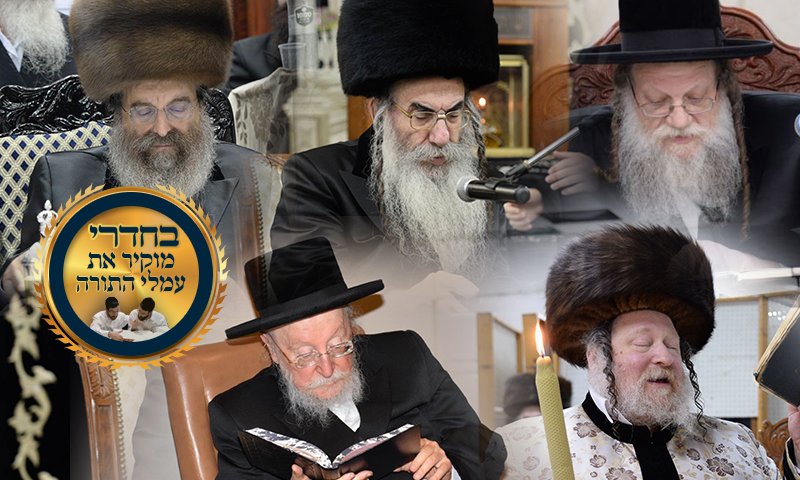
The revered Rebbe who immigrated to Israel with the "Children of Tehran" and was privileged to study in fellowship with the Rabbi from Ponivez, the Rebbe who protested in the Sloboda Yeshiva when they spoke against the Baal Shem Tov, and the father of the Rebbes who made sure that all his sons studied only in Lithuanian yeshivahs • Special project in 'Behadrei Haredim'
- Moshe Weisberg
- All credit goes to Moshe Weisberg and bhol.co.il 3 Sivan 5778
- 17 comments
Photos: Shuki Lerer

Shifting gears for the benefit of the Haredim: This is the university that surprised with the "firsts" model
Shimi Farkash wrote an introduction
16:36
Every lady will agree that these products are a treat - and now starting at 69 NIS
Promoted content
21:49
On Monday she went out to buy a dowry, and on the eve of the holiday she left for the city of Jerusalem.
In collaboration with the City Fund
08:30
They guide their hundreds of faithful followers to their light, to adhere to, to walk the path of rooted Hasidism through the Baal Shem Tov and his disciples. They are as careful as they are severe in all Hasidic customs. You will find "matters" with them. Sublime importance and value to a distinct Hasidic form of leadership - clothing, times of day, reading Kvitlach, setting tables and all the rest.
Some of the Rebbes are even active members of the Council of Torah Elders of the Hasidic Agudat Israel - the big sister of the Lithuanian Flag Council. But they acquired their Torah possessions precisely in the world of the Lithuanian yeshivahs, where their Torah education was shaped. All of them are connected and devout to this day with every fiber of their souls to their many, whose roots are deeply rooted somewhere in the intellectual and intellectual steppes of Lithuania, some from Maklem and some from Grodno, some from Memir or Novogradok.
Not many know, but a significant and notable portion of the Rebbes of our generation acquired their concepts and educational outlook on Torah and practice in the halls of Lithuanian yeshivahs, with the magnificent Ponevezh Yeshiva at its center, the flagship of the Torah world.
Today, we see before our eyes a rare and special fabric of figures and spiritual leaders, whose enormous personalities were merged on the one hand in the Lithuanian Torah melting pot, and on the other hand, their souls are woven with the spirit of fire and the flame of Hasidism that they received and purified from the house of their ancestors, which they received and passed on to them from their ancestors all the way up to the Holy of Holies from the Holy Baal Shemesh and his holy disciples. "And they all came together in a covenant, we will do and be heard, we said as one."
On the eve of Shavuot, the time of the giving of our Torah, 'Behadrei Haredim' published a rare glimpse into the Rebbes who acquired their Talmud in the Lithuanian Torah world.The Rebbe of Biala - Rabbi Ben Zion Rabinowitz
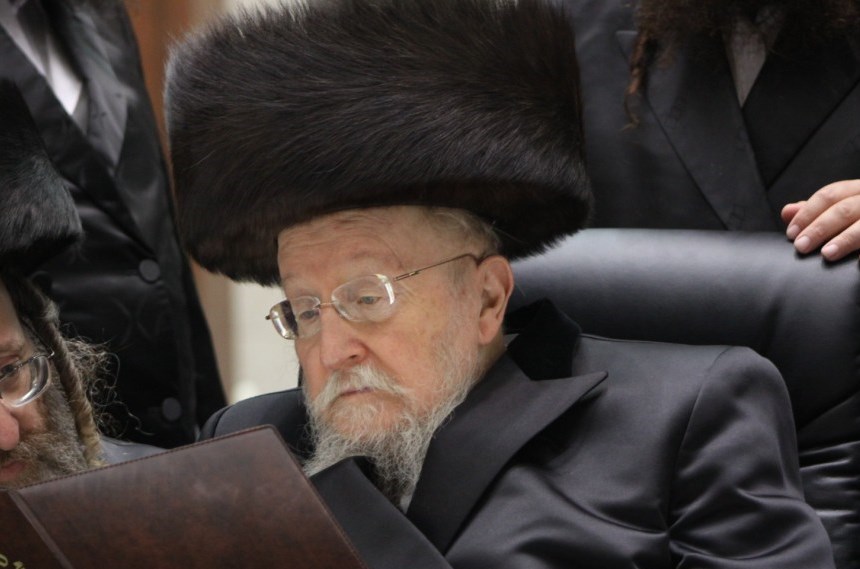 Photo: The Rebbe of Biala. Photo: Matityahu Goldberg
The Rebbe of Biala, a member of the Council of Torah Sages of Agudath Israel and former Gabaad of Lugano, is a miraculous figure, whose uniqueness and power also stand out among the majestic figures that adorn the Eastern Wall of the world of Torah and Hasidism.
The key point in his character is the multiplicity of the virtues of his soul; and most importantly, the ability to blend fire of many shades and sources of life - into one flame that rises and transforms itself. A miraculous violin plays in the heart of the Rebbe; and from it springs and rises a song of dozens of strings, each string and the uniqueness that plays from within its entrails; and all the strings together combine in a miraculous harmony, creating a new song to God.
The Rebbe of Mielah was already recognized in his youth as one of the greatest practitioners and scholars of the Ponevezh Yeshiva. A tremendous genius whose knowledge of all the rooms of Torah is startling. Who, years later, also reveals himself as a rebbe of fervent Hasidism. The ability to blend the Hasidic holy fire that burns in him like a furnace, with the scholarly depth with which he walks as a member of the house in all the realms of the Shas, the first and the last.
From the beginning of his arrival in the Holy Land, the Rebbe entered to study in Ponivez, first in the small yeshiva, and then in the large yeshiva. In the yeshiva, he became the distinguished student of the yeshiva heads, Maran Gramma Shach, zt"l, Har"sh Rozovsky, and Gar"d Povarsky, zt"l.
Later, the Rebbe said, "They were all my gentlemen, and I drank in their words with thirst. But I had a private, personal connection with the Gaon of Ponivez, Rabbi Yosef Shlomo Kahaneman, zt"l, who also assisted me during my time of immigration to Israel as part of the "Children of Tehran" immigration. I also had the privilege of studying with him in a habvrata during my first years of studies in the yeshiva. For five years I studied with him at his home, he used to prepare his lesson with me."
The Mielah Rebbe currently leads hundreds of families throughout the country. He divides his daily schedule between Safed and Jerusalem, and in the near future he will move to live in Ma'ale Amos.
Over a hundred long and well-organized volumes of Torah novellas were printed during the Rebbe's long leadership years, which have become basic books in the world of Hasidism.
The Rebbe of Sadigura Rabbi Israel Moshe Friedman
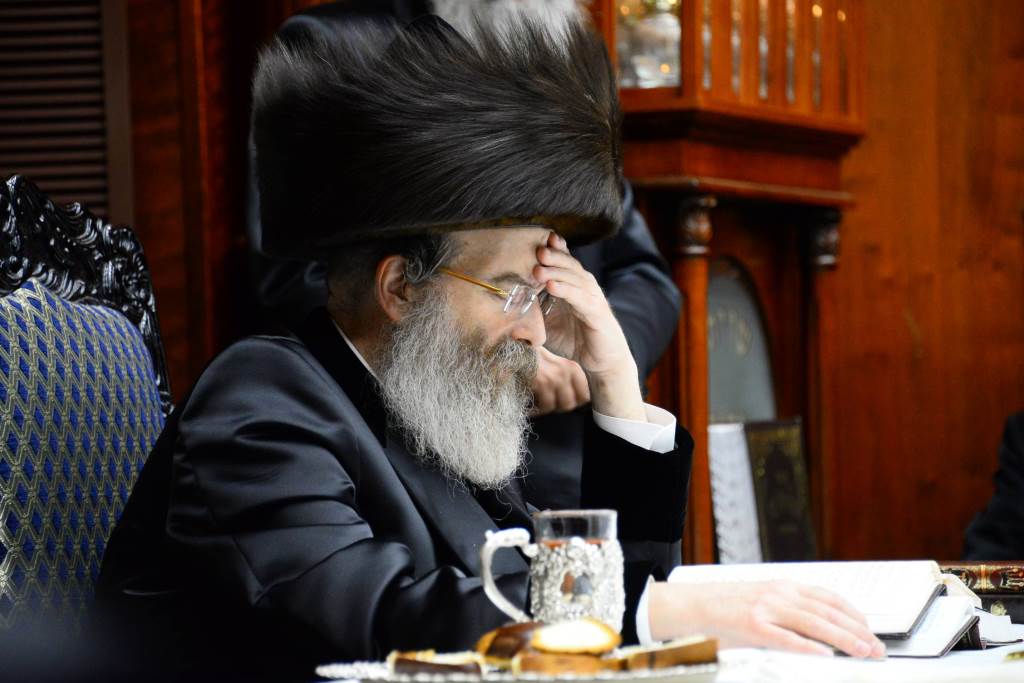 Photo: The Rebbe of Sadigura. Photo: Shuki Lerer
The Rebbe of Sadigora was young in years, when his star shone like a diamond in the crown of the Ruzhin-Sadigora kingdom. The Rebbe was blessed to grow up in the shadow of his great grandfather, the Rebbe Baal Knesset Mordechai, whom he was very fond of. During those days, he was blessed to draw deep treasures from his great grandfather's wisdom. At the same time
, he acquired his Torah by attending and persevering in the training of the Ponivez Yeshiva in Bnei Brak. The Rebbe thus blends East and West in his personality and teachings - collecting pearls from all corners of the Torah and Hasidic world. The Rebbe's Torah stature is an object of admiration that transcends all circles. His talks are sometimes delivered in a yeshiva style, and include profound passages of discourse. The writings of the Ramban, the Maharal, and other ancient books of thought are never removed from his table.
When he arrived at the Aish Mekdash, his father became engaged to the daughter of the governor, the great Rabbi, Rabbi Chaim Moshe Feldman of London, one of the first yeshivahs in the Malchut Hasidic kingdom of Viznitz. The ties between the families had been forged years earlier, as his own father, who was also a son-in-law to the Feldman family, was with Rabbi Yosef Aryeh Feldman, the grandfather of Rabbi Chaim Moshe. The Rebbe's great beard, the Rebbe's 'Knesset Mordechai', also participated in the Rebbe's wedding celebration, and older Hasidicians testify that great joy was evident in all his movements. Three months later, the soul of 'Knesset Mordechai' ascended to the highest treasures.
After his marriage, he continued to diligently study the Torah, filling his stomach with Shas and poskim, and even earned the honor of being praised by some of the greatest rabbis of the generation, including the Grahm Feinstein, the Grachha Padva, the Graeme Weiss and the Grash Wasner, who praised him greatly. During his time living in Crown Heights, the Rebbe forged a close bond with the author of 'Igrot Moshe', who never wavered from his affection, while the close and courageous bond with the author The 'Shvat HaLevi' continued until his last days, shortly before his passing on the first night of Passover 5775.
The Rebbe established his residence in the Hasidic neighborhood of Stamford Hill in London, where those with doubts and those seeking knowledge began to approach him - from all walks of life, Lithuanians and Hasids. Twenty-two years ago, the unique phenomenon became institutionalized - and became a community: on Tuesday, Bashan 5754, the day of the hilula of his great-grandfather from Rozhin, he established the 'Or Yisrael' synagogue in the Golders Green district. People raised an eyebrow at the time: What did he, a perfect Rozhin prince, have in a neighborhood far from Hasidic life? The practical answer was not long in coming: dozens of families whose roots touched the Rozhin house soon found their way back to the Hasidic 'hoif' that was established in the Lithuanian stronghold. They, and especially their families, completely changed their way of life.
Thus, against his will, the Rebbe was among the first to sit at the rabbinical Mizrahi table in Haredi London, when his unique wisdom managed to neutralize himself from all controversy and division.
Serving as the rabbi of the community in London forced the Rebbe to reveal every inch of his unique personality. Haredi London, and not only, learned to recognize his virtues and his exalted qualities, his genius in all Torah subjects, his wonderful perseverance, his compassionate kindness, and above all, his desire to help every Jew in need, as was the tradition of his great father's house.
The members of the community are bound to him with a thick love. Many of them will not take a single step in their lives, financial or otherwise, without consulting him, and he, in turn, returns their love doubly. The Rebbe takes care of all their needs to the point of selflessness, accompanying them at every stage of their lives, easy or difficult, happy or sad. To this day, about three years after he ascended to the leadership of the Rozhin-Sadigora community,The community in London still follows him with a thick layer of love and is led by him, with the Rebbe granting his community members visits from time to time.
When the Rebbe ascended the throne of his ancestors, the Holy Court of Sadigura began to experience leadership that blends the uniqueness and nobility of the ancestors of the dynasty, and adds its own nuances to them. The Admor is admired by many outside the Hasidic world, thanks to the Rebbe's extensive acquaintance with all areas of the Torah world, alongside a deep and thorough educational program that prepares flocks of budding Hasids who will continue to walk on the path that leads to the House of K-L, on the unique path of the monarchy of the House of Rujin.
The Rebbe of Alexander - Rabbi Yisrael Bezalel Yair Danziger
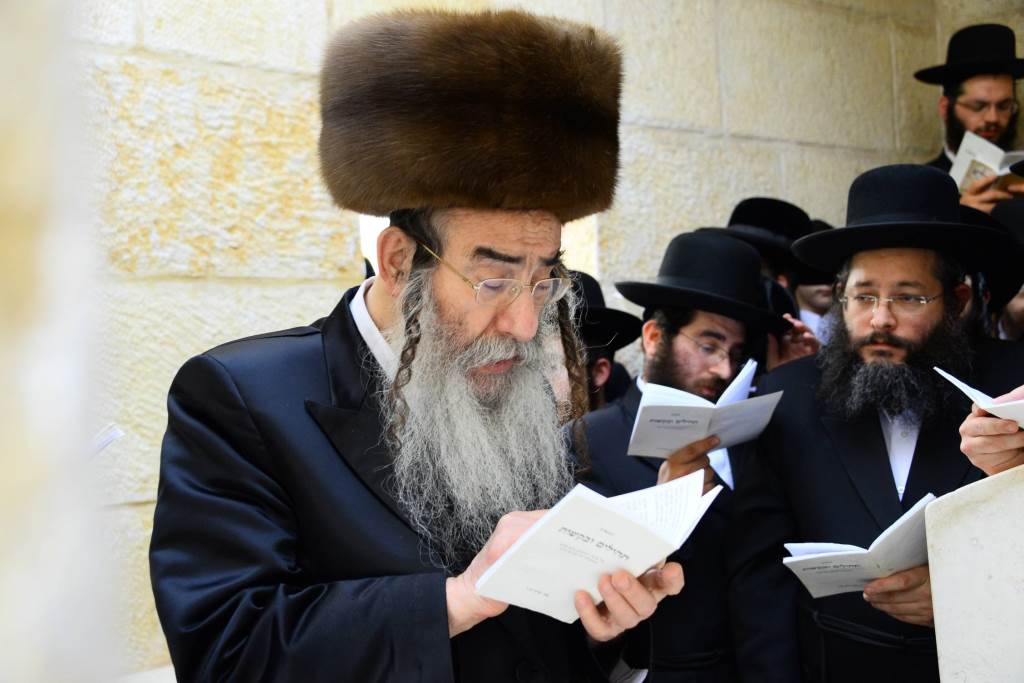 Photo: The Rebbe of Alexander. Photo: Shuki Lerer
From infancy, the Rebbe of Alexander was destined for leadership, even during the days of his great-grandfather, the author of "Amonat Moshe," who showed him extraordinary signs of kindness. For example, in the covenant that took place on the day of the Rebbe's wedding with the daughter of the Gaon Rabbi Moshe Bergman, the head of the Rashbi Yeshiva, father of the council member of Degel, the Grandmaster Bergman), the author of Amonat Moshe instructed that the groom would be honored in the godfather's ceremony, noting: "He has great power." To this day, the Rebbe sees his great grandfather as his most significant spiritual master. Even when the Rebbe was sent to grow up in the world of Lithuania, in the Beit Meir Yeshiva, the Slobodaka Yeshiva, and later in the Chazon Ish Kollel, the force of the Hasidic strictness and detachment did not depart from him, and all his conduct was according to the instructions of his holy grandfather.
He dedicated all of his years in the yeshiva to the study of Torah. He would sit in the Beit Midrash for hours upon hours, studying with perseverance and immense concentration. The best young men of the yeshiva tried to befriend him and gain his closeness.
And with Despite the noble and humble manners that characterized him even then, he did not hesitate even as a young man to maintain the honor of Hasidism and even to take the sword of protest. When one of the yeshiva members in Slobodka slipped in his tongue and spoke in a way that was interpreted as disrespect for the holy Baal Shem Tov, it was the young man Rabbi Yisrael Bezalel Yair, who did not hesitate for a moment and initiated a broad protest in honor of the Light of the Seven Days.
The Rebbe's roommates at the yeshiva were Rabbi Avraham Yosef Leizerson, chairman of the Independent Education Board, along with the eminent Rabbi Yitzhak David Grossman.
Reminiscing about those days, Rabbi Leizerson extols the Rebbe's wonderful Hasidic solitude during his youth.
"When I remember those days in the yeshiva," says Rabbi Leizerson, "when I was privileged to study with the Rebbe of Alexander, two images come to mind: his noble Hasidic leadership, and his perseverance.
"His solitude was very prominent in the Lithuanian yeshiva. Even without knowing him, you could tell that he was the son of saints. His entire leadership exuded a special nobility. And alongside that was his immense perseverance. I have a picture of him from those days, when he was bent over his Talmud and his hair was parted on both sides, studying and studying and studying. This is the picture that appeared before my eyes. His movements on the Gemara. He was also a great speaker in prayer. He would pray slowly and with great fervor.
"On the other hand, it is true that he worked hard in study and was a great perseverer, but he was involved with people and was beloved by all his friends. The verse can be applied to him: 'His heart was not haughty, nor his eyes lifted up.' He was truly humble and would speak to everyone at eye level."
Throughout the leadership of his grandfathers, the current Rebbe was his right hand. According to the testimonies of the elders of the Hasidim, the Rebbe had a special sense of understanding his grandfathers and their wishes, and this is the reason for the deep bond that developed between them. His grandfather's leadership ended with his passing on the 23rd of Adar 5773, when his only son, the Rebbe, the Imrei Menachem, was crowned. From that day on, the Rebbe Shlita entered even more into the thick of things and became the leader of the young men in Hasidism.
Already in the first letter of encouragement from the author of the Imrei Menachem to his followers dated the 27th of Nissan 5773, just a month after his passing, the Rebbe zt"l notes that he was writing the letter after "I was asked by the sons of Rabbi Israel."
In the same year that the 'Amonat Moshe' passed away, the Alexander Yeshiva was opened, with the Rebbe appointed to serve as its spiritual director. The young men from that period remember these years as special years in the history of the court.
The Rebbe of Modzitz Rabbi Chaim Shaul Taub
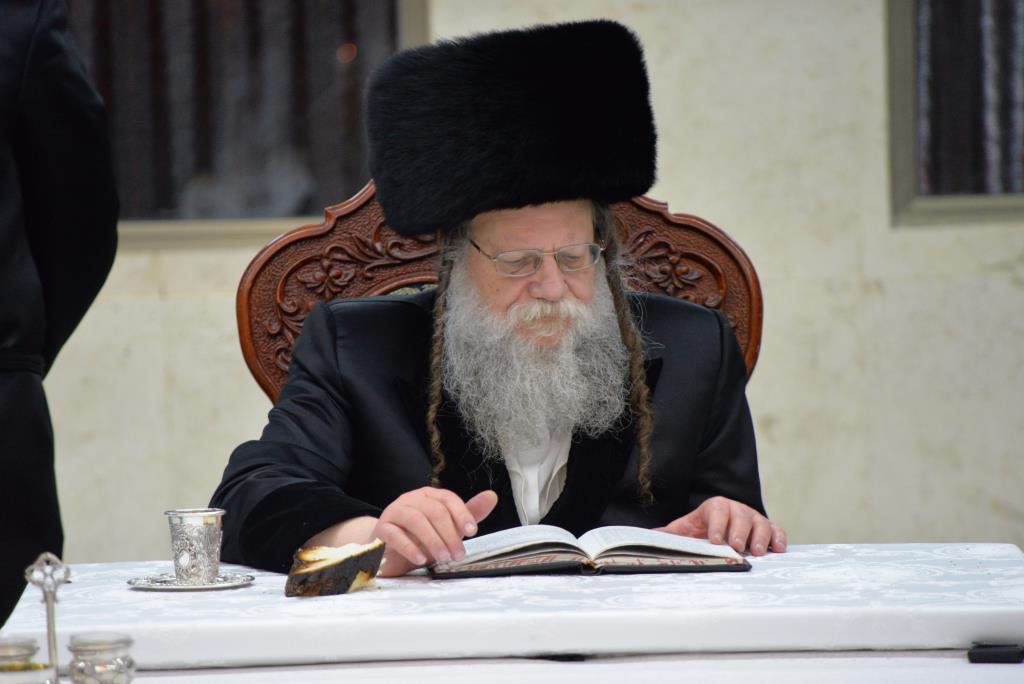 Photo: The Rebbe of Modzitz. Photo: Shuki Lerer
The growth trajectory of the Rebbe of Modzic was different from that of all other Rebbes. He spent his childhood in Tel Aviv, his youth in the Ponevezh Yeshiva, and in his blessed years he adhered to his rabbis, the yeshiva heads who instilled in him the Lithuanian way of learning.
The Rebbe of Modzitz was only eleven years old when he was sent from the Talmud Torah 'Yesodei HaTorah' in Tel Aviv
to be one of the students of the Ponevezh Yeshiva for Young People. There, he became closely associated with the heads of the yeshiva, Maran Gaon Rabbi Michal Yehuda Lefkowitz zt"l and Maran Gaon Rabbi Aharon Yehuda Leib Steinman zt"l. During prayers, he would sit next to his rabbi, Maran Rabbi Steinman, and to this day, the Rebbe often speaks of the warmth that accompanied Rabbi Steinman's prayers in the yeshiva.
When a few years ago, one of the charitable foundations in Bnei Brak held a Tashbar prayer in the house of the Rebbe, with the participation of the Rebbe. The leader of the prayer, one of the most important rabbis, served as a public emissary, and prayed, as is customary, with a broken heart and in a weeping voice. After the prayer was over, the Rosh Yeshiva turned to the leader of the prayer and said to him: 'You did not do well.' When praying with children - one should pray with them in a pleasant way, not in a sad melody...' The Rebbe replied and said: 'I remember well how the Rosh Yeshiva used to pray pleasantly and warmly in the Ponivz Yeshiva' '... In response, the Grail turned to his associates with a look of satisfaction and said: 'See how well he remembers my prayers in the Yeshiva'...
At the age of only fourteen and a half, the Rebbe went up to the large Ponivz Yeshiva, where he quickly became a favorite of the Rosh Yeshiva because of his sharp mind, his perseverance, and his tendency to study carefully and
in depth. While studying in Ponivz, the Rebbe was one of the best in the Yeshiva. One of the students, a friend of the Rebbe's, describes: "There were several talents in our committee who today occupy the first row in the world of Torah, but he was ahead of them all. Those years together were the most pleasant for me. We would review together, for hours, the Rosh Yeshiva's lessons. We would spend hours trying to understand why 'Reb Shmuel' (Rozovsky) put one question before another, and what precision emerged from his words. He would analyze everything, and I remember the fellowship with him as one of the most special experiences I have ever had.
"The first year we heard lessons at Ponivez, we would repeat the lessons with precision. He didn't miss a single movement of Rabbi Shmuel's or Rabbi Schach's. He knew how to repeat it in a profound way. He has unusual talents.
" "Not long ago," he says, "I met him at Ben Gurion Airport, when he returned from a visit to New York. There were Hassidim standing there with signs saying 'Welcome in the name of Hashem.' The Rebbe spoke to me about it with embarrassment, and said to me: 'What is the need for all this?' But I told him: 'Rabbi Chaim Shaul, this is the honor of the public and the honor of Hasidism.'... Indeed, I think the Hassidim earned what many did not."
As mentioned, the Rebbe was fourteen years old and a few months old when he was examined for a large yeshiva. The Rebbe entered the examination, which was held before the head of the yeshiva, Maran Gaon Rabbi David Povarsky zt"l, along with a group of other young men. The Rebbe Povarsky presented a question that arose from page 10 of Tractate Gitin, and the only one who knew how to answer it was the grandson of the then Rebbe of Modzic. The head of the yeshiva was amazed and replied: "This is a combination of a Hasidic and Lithuanian excuse, because this excuse appears in both the 'Chiddushei Ri"m' and the 'Noda Bi Yehuda.'
The Admor's classmates also testify that the head of the Ponevezh yeshiva for young people, the gaon Rabbi Zvi Shraga Grossbard zt"l, spoke of him in this way: "I have never seen a young man as perfect as Chaim Shaul. In Torah, in character, in everything. He has only one flaw: he is a Hasid... and if he did not have this 'flaw', I would have wanted him as a son-in-law..."
It so happened that in the midst of a lesson given by one of the yeshiva's leaders, the student Chaim Shaul Taub presented a sharp question. The head of the yeshiva thought for a moment, and immediately stated the sharpness of the question. To his regret, he did not have an answer. In response, the head of the yeshiva closed the gemara and declared the lesson over. Seeing this, the student began to struggle to find an excuse. Every time the head of the yeshiva came to offer him an excuse for his own question, the head of the yeshiva would reject him, saying: 'Your problem is the strongest of all.' The excuses...
That same yeshivah head once approached the future Rebbe's congregation and said to him: 'Look, tonight Chaim Shaul is getting engaged'... Of course he was. The next day, the yeshivah head approached the congregation and said to him: 'You probably think I did a miracle... but there is neither a miracle nor anything like it here. And if you ask - how did I know that Chaim Shaul was getting engaged? I will give you an answer: Chaim Shaul never missed Seder A. Since he missed it for the first time, I understood that the matchmaking relationship was on the horizon.
His years of study at Ponivez were years of Torah ascension for him that engraved eternal impressions in the Rebbe's Torah soul. Whenever money rolled into his pocket, he would enrich his library with books, while he would return to his parents' house in Tel Aviv once every two months, and sometimes less.
The Rebbe of Pittsburgh - Rabbi Mordechai Leifer

Photo: The Rebbe of Pittsburgh. Photo: Shuki Lehrer
The connection between Pittsburgh Hasidism and the Lithuanian Torah world began in 1950 during the arrival of the Rebbe from Pittsburgh, the author of the 'Amonat Avraham' zt"l, to live in the city of Ashdod. The fact that Kiryat Pittsburgh, which was established with the Rebbe's arrival, was adjacent to Kiryat Ponevezh, which had been founded a few years earlier by the Rabbi of Ponevezh zt"l, where he established the Ponevezh Yeshiva institutions, including the Grodno Yeshiva. This reality created the special connection between the Rebbe zt"l and the Grodno Yeshiva, its leaders and teachers. A
courageous and special connection existed between the Rebbe zt"l and the Rebbe, the Haredz Karlenstein zt"l, with the Rebbe being particularly remarkable for his greatness in the Torah and his prior reverence for his wisdom. The Rebbe zt"l was an active participant in many of the religious movements in the city of Ashdod that were run by the Haredz Karlenstein zt"l.
One The most notable characteristic of the Rebbe's connection to the Grodno Yeshiva was that on Shabbat nights, the main participants in the pure tables (tish) that the Rebbe would lead were young men from the Grodno Yeshiva, due to the fact that at that time there were no other Haredim in the city. During the tish, the Rebbe would ask the young men what topics were being discussed in the yeshiva, and when he spoke Torah in the tish, they would focus on the same topics being studied in the yeshiva, even though he himself was not involved in those topics at the time.
This special connection led the heads of the yeshiva to invite the Rebbe several times to give a general lecture in the yeshiva hall, a rare sight in itself.
When the Rebbe immigrated to Israel and settled in the city of Ashdod, the Rebbe was about 14 years old. Being the only son of his parents, it was difficult for his parents to send him to a place of Torah study far from their home. Hence, the decision was made to send their son - the Rebbe - to the Grodno Yeshiva, and this despite the fact that his education was in a distinctly Lithuanian theoretical manner. The Rebbe, who was relatively young, for a young man entering a large yeshiva, was accepted to study in the yeshiva by his father, and after a few years he was sent to study in the yeshiva of Sanz and Tsvebin, when after a short period he returned to the Grodno synagogue. There he became close to all the heads and rabbis of the yeshiva, but he was especially attached to his Rabbi, the Gard"tz Karlenstein, zt"l.
The Rebbe used to say that he was greatly influenced by the Gard"tz's theoretical way of studying, known for its special depth and pursuit of truth. Over the years, the Rebbe used to instruct his sons, during their early years, to go and study with the Gard"tz, zt"l, who enlightened them and loved to hear their innovations. The Rebbe also says that the Gardz's talks penetrated his bones and were special in their force in demanding that he walk the straight path. When the Rebbe points out the greatness of his great rabbi, the Gardz, in his talks the Gardz would point out certain obstacles in all of Israel long before others knew and saw what was involved.
An interesting anecdote is told in the Pittsburgh courtyard, that one year, there was no meat available for Yot from the kosher that he was careful to put on his table, but from the Lithuanian "She'erit Yisrael" kosher that was established and founded by the Gra'am Shach, zt"l. The Rebbe asked to find out if his rabbi, the Gardz, would eat this meat for Yot, and after they replied that the Gardz did indeed eat this kosher, the Rebbe replied and said, "If it's good for Rabbi Karlenstein, it's good for me too."
Throughout the years, the Rebbe would walk in front of his rabbi on holidays and festivals, even though the Rebbe was young. And the disciple of the Haredatz, the Haredatz respected him in a special way, befitting the leader of a holy community in Israel.There was also a special spectacle when the Rebbe would rush to the Gard"tz on Rosh Hashanah night to bless and be blessed with the blessing of years. The Rebbe continued this practice after the passing of his rabbi, the Gard"tz, when the Gaon Rabbi Moshe Shimida, the Gard"tz's son-in-law, was appointed to preside over the yeshiva, to come at the head of the congregation of his followers to bless and be blessed with the blessing of years.
The Rebbe of Strykow - Rabbi Yaakov Dan Stern
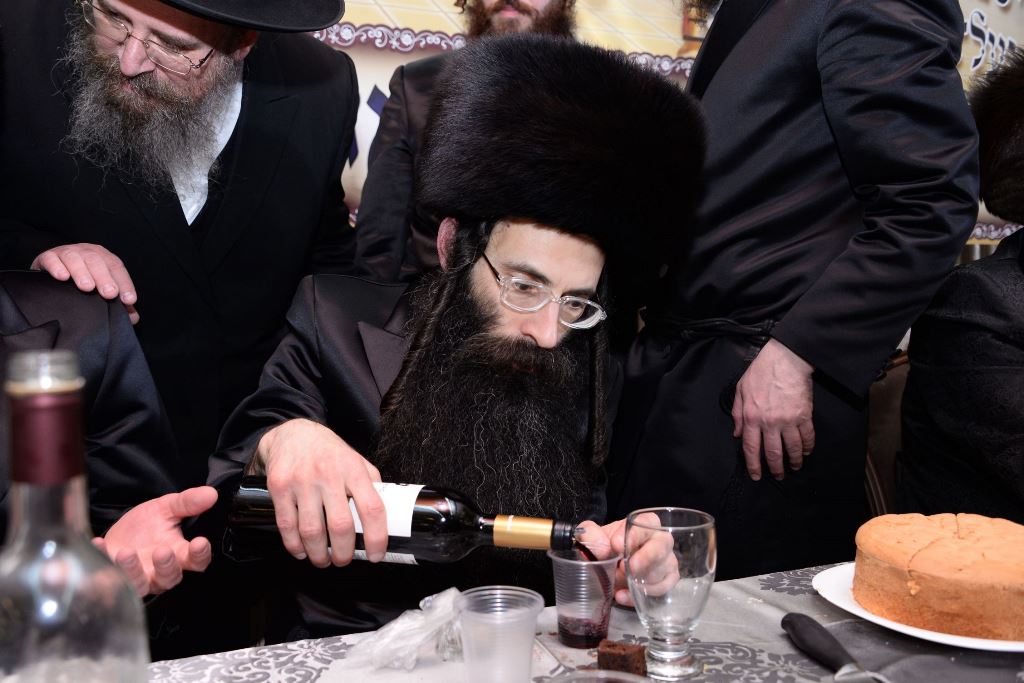 Photo: Rabbi Mastrikov. Photo: Shuki Lerer
Strykov Hasidism is known for its special and rare connection to the Lithuanian Torah world, dating back to the period of the leadership of the previous Rebbe, Rabbi Avraham Avigdor Landa zt"l - the grandfather of the current Rebbe. This is due to his courageous Torah connections with his great rabbi, the Rabbi of Brisk zt"a, with whom they developed a special and rare closeness, a connection that was born from the period of the Rebbe's exile in the city of Vilna, where he fled the horrors of the accursed Holocaust, when at that time the Rebbe's entire leadership of the Rabbi of Brisk zt"l was directed towards him as a disciple of his distinguished rabbi.
This connection also produced a fruitful Torah connection and courageous friendship between the Rebbe zt"l and the Maran Gramm Shach zt"l, whom he met while he was in the shadow of the Rabbi of Brisk zt"a. These two great men of the world maintained a continuous Torah connection and would visit each other's homes for holidays and festivals, with the Rebbe zt"l even making sure to participate in all the celebrations that took place in the family of the Gra"m Shach zt"l.
It is natural that the successor to the Strykov dynasty would also be rooted in the Lithuanian world of Torah, continuing the special blend of a Hasidic Rebbe with its meanings combined with a Torah worldview from the House of Lithuania.
The Rebbe Rabbi Yaakov Dan Stern of Strykov, Shlit"a, was crowned as the successor to his great grandfather, the Rebbe Rabbi Avraham Landa zt"l, by a significant portion of the Hasidim of Strykov, as he was the grandson of the previous Rebbe zt"l, the son-in-law of the Gaon Rabbi Moshe Stern. The elders of the Hasidim, such as Rabbi Meshulam Zusha Gorlitz, zt"l, and others, saw him as worthy to sit on the throne of his ancestors and continue the Strykov dynasty and the Rebbe.
Throughout his years of study, both as a child and teenager and later as a yeshiva student, the Rebbe acquired his Torah knowledge in Lithuanian Torah institutions in a distinct manner.
As a child, the Rebbe studied in the home of Maran Chazon Ish Zia, near and visible from the residence of his grandfather, the Rebbe, zt"l, who had an eye on raising and educating him in the way of his ancestors. In
a small yeshiva, he acquired Torah possessions in the Lithuanian yeshiva "Beit David", under the eyes of the head of the yeshiva, Rabbi Zvi Schenker, a member of the Council of the World's Torah Greats of the faction, and the supervisor, the late Rabbi Yaakov Gutman zt"l.
Then in 1985, he entered the world of the Ponevezh Yeshiva, where he acquired wisdom from Maran Gramm Shach, who had a special interest in him as the grandson of his friend the Rebbe. He also received Torah from all the heads of the Ponevezh Yeshiva, Rabbi Mordechai Shlomo Berman and Yevbachalta HaGrid Edelstein and the Garvada Povarsky.
Upon his marriage to the daughter of Rabbi Menachem Nachum Tversky, son of Rabbi Yochanan of Rachmastrywka, and head of the Maor Einayim Yeshiva, he began his studies in the Brisk Kollel, where the Rebbe sat and meditated on his Talmud day and night together with the rabbi Moshe Soloveitchik, brother of the Gaon Rabbi Avraham Yehoshua, head of the Brisk Yeshiva.
The Rebbe leads his followers in Jerusalem, where his beit midrash is located. Only recently did they begin construction of a new building that will serve as the center of the Hasidism. There is also a Beit Midrash in the city of Bnei Brak, where his father, the son-in-law of the Rebbe, the late Rabbi Moshe Stern, serves as the rabbi of the Beit Midrash.
In addition, the Rebbe serves as the rabbi of the Maor Einayim Yeshiva in Rachmastrywka, where he gives shiurs almost every day - a rare thing in itself, for a Rebbe to serve as a daily shiur leader.
The Rebbe of Trisk - Rabbi Moshe Mordechai Eichenstein
 Photo: The Rebbe of Trisek. Photo courtesy of the Ultra-Orthodox World Magazine.
The Admor of Trisk, not many know that at the time when the elders of the Trisk Hasidim approached them and asked to crown the Admor as their leader and descendant of the dynasty, the Admor was content and almost refused the request, because he saw his main calling in the propagation of Torah in the yeshivah way. The Admor turned to consult with his distinguished rabbi from the Itari Yeshiva, the Rosh Yeshiva, the Haredi Auerbach, zt"l, and he ordered him to be adorned with the crown of the Admors, telling him, "You are not free to abandon it, and the heavens have marked out the path for you to lead the community of Hasidim."
Similarly, at the coronation, the Haredi Auerbach, zt"l, arrived and even signed the coronation document for the Admor together with the Admor of Belza.
The Admor of Trisk, a Secret Keeper Who Never Loses a Drop The Rebbe, in his youth at Beit Vegan, would recite novellas before the Maran Gaon Rabbi Yechezkel Abramsky, zt"l, close to his jubilee. For years,
the Rebbe has been leading his community in Rama for half a jubilee. Crowds gather at his beit midrash on Sorotzkin Street every Shabbat and holiday, and he recites his holy words to them in Rama.
As a young man, the Rebbe of Trisk was one of the first students of the Lithuanian Yeshiva Yeshiva Itari, which at that time, about forty-five years ago, was one of the most important yeshiva in the holy city of Jerusalem, not least due to the important students who flocked to it. The Rebbe - one of the students who set the yeshiva's gates - has a Yad Vashem account for this. He bought his Torah from his teacher and rabbi, the late Rabbi Auerbach.
In later years, he began traveling to Bnei Brak, where the Rebbe was privileged to buy Torah from the heads of the Ponevezh Yeshiva, the rabbis of the Ge'onim, Rabbi Shmuel Rozovsky, Rabbi David Povarsky, and Rabbi Shach. Even the Rabbi of the Jewish High Priest Povarsky considers him a student after hearing dozens of shiurim from him.
The Rebbes of Lelov, Suchachov, Boston and Kuznetsov
It is known in the world of Hasidism that the sons of the Rebbes of Lelov, Rabbi Alter, whose beit midrash is located on Akiva Street in Bnei Brak, serve as Rebbes. Some of them are influential, but the common denominator among them is their renowned worship of God out of joy and true love of Israel.
What is less known is that their father, the Rebbe, Rabbi Alter, was very careful that all of his sons study in Lithuanian yeshivahs, some of whom already exerted a Hasidic influence in the Lithuanian yeshivahs they attended in their early years.
Among the sons are the Rebbe of Lelov Borough Park, the Rebbe Elimelech Biderman, and the Rebbe of Rebbe
Shmelka Biderman, rabbi of the Beit Midrash of Lelov in London, who studied at the Ponevezh Yeshiva. In addition, other Rebbes who studied at the Ponevezh Yeshivahs are the Rebbe of Sochczow from Beit Vegan, son-in-law of the Gra Sternbuch zt"l Rab"d of Antwerp, as well as the Rebbe from Boston from the Har Nof neighborhood in Jerusalem, who studied at the Ponevezh Yeshivah.
The Rebbe of Kuznetsz, who leads a community of dozens of families, also studied at the Ponevezh Yeshivah. The Rebbe of Kuznetsz, who leads a community of dozens of families, also studied at the Mir Yeshivah. The Hasidic community in Manhattan has a synagogue in Tel Aviv and a Hasidic yeshivah. In recent years, a Hasidic community has even been established.




No comments:
Post a Comment