Response to an article published in the newspaper 'Mishpacha'


The Picture of The Vilna Gaon was posted on Pinterest by
Itay Matan
A. "Descendant of the Gra"?
Contrary to what was written in the article, Rabbi Milikovsky's parents were not "descendants of the Lithuanian Gaon, Maran Gaon of Vilna, Z"a," but rather descendants of his family's ancestors, and to the best of my knowledge, researchers today are unable to accurately mark the family's relationship, due to the generations that have passed.
B. Did Rabbi Milikowski hide the truth from his parents?
The article claims that Rabbi Nathan's involvement in Zionist activity during his studies at the Volozhin Yeshiva was allegedly done against the will and wishes of his parents:
"While his innocent parents were content with their son sitting hunched over the stand in the yeshiva - their jewel was spending time in Zionist activity in Siberia."
I would like to point out that this serious claim, which makes the rabbi a fraud, is not supported by any document or testimony, and it is clear from it that the writer is biased, apparently not liking the character of Rabbi Milikowski, apparently for the "crime" of his Zionism.
Milikowski studied in a yeshiva for about six years (1866-1931). Although he occasionally went on Zionist propaganda trips, he devoted most of his time to studying Torah.
In late 1941, at the age of 25, he left the yeshiva, and from then on he devoted most of his life to Zionist propaganda campaigns.
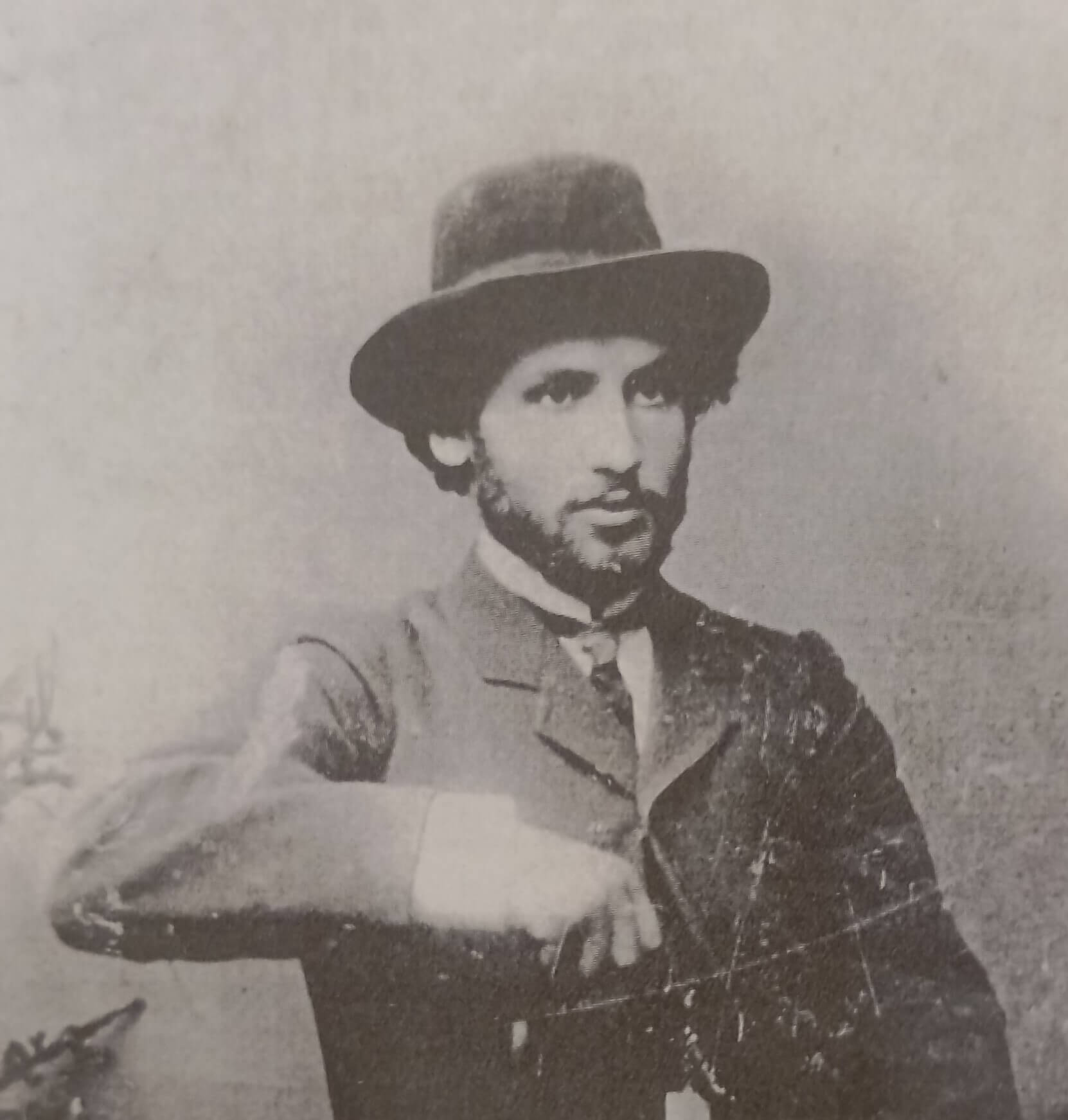
It is hard to imagine that Milikovsky, who was sent to Volozhin by his loving parents, did not inform them of his decision to leave the yeshiva for Zionist work, and that he did not tell them about his Zionist travels while he was a yeshiva student. Is it possible that he concealed this from them? In my opinion, this is unnecessary compulsory education, and there is no logical reason to think so, as long as there is no evidence of this. While it is possible to raise the possibility that the parents wanted him to grow up to be a teacher or Rosh Yeshivah, and were disappointed that this did not come true, it must be said in fairness that there is no documentation for this and that this is only a hypothesis.
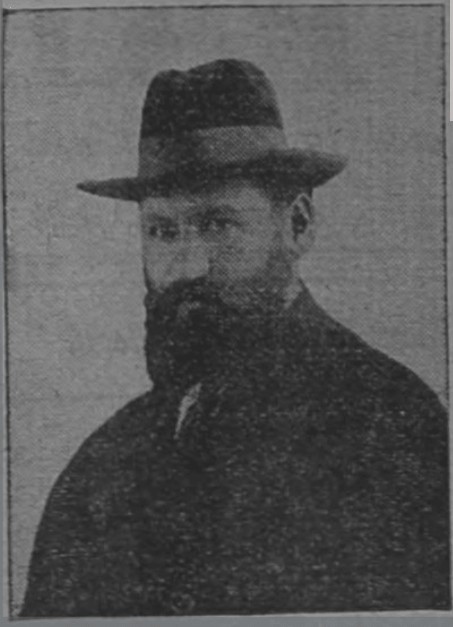
C. "Return to the Torah Tabernacle"
Furthermore: From the article, the impression may be created as if he had withdrawn from the tent of Torah, from the study of the Beit Midrash (the synagogue). However, his acquaintances described the love of Torah that was in him, and his devotion to Torah in every free moment.
In an article published about him in the Haaretz newspaper after his death, it was written:
"The holy books accompanied him on his difficult journeys. He always consulted them between meetings, but he was never satisfied with them. This man carried within him one aspiration: to return to the Torah tabernacle. But he did not have time to finish his affairs, and in his prime the giant was cut off."
The author of the article noted: "It must be said honestly, in his self-perception he saw himself as a yeshiva student. His heart was full of appreciation for Torah and Judaism, and he saw in his actions the advancement of the mitzvah of settling the Land of Israel." But this formulation misses the point: it was not "appreciation for Judaism" and his activity was not intended only for the sake of "fulfilling a mitzvah," but much more than that: he saw it as a fulfillment of the Torah he learned in the yeshiva.
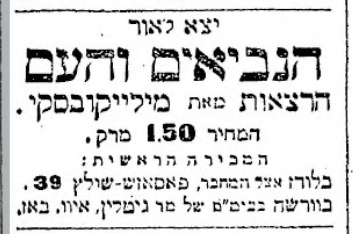
D. The question of ordination to the rabbinate
The article opens with a dramatic announcement:
"Our grandfather," the Netanyahu family members say, "was a rabbi in Lithuania." However, a series of new documents, uncovered for the first time in a Polish archive, show that, at least until a late age, the grandfather did not have a teaching permit."
This claim also closes the article:
"Benjamin Netanyahu often boasts to the Haredim that "his grandfather was a rabbi." Well, as we have already understood, that is not really accurate, at least not in the official sense of the matter."
The truth is, as the article itself presented, that he was ordained to the rabbinate by Rabbi Yehuda Leib Kowalski, on the 17th of Shvat 1912. What is not official about this? Does the fact that Rabbi Kowalski adheres to Zionism mean that in the eyes of the 'Mishpacha' newspaper, his ordination does not count?!
But in fact, Rabbi Kowalski was not the first to confer ordination on Rabbi Netanyahu, and the claim that "until a late age, my grandfather did not have a teaching permit" is a complete mistake.
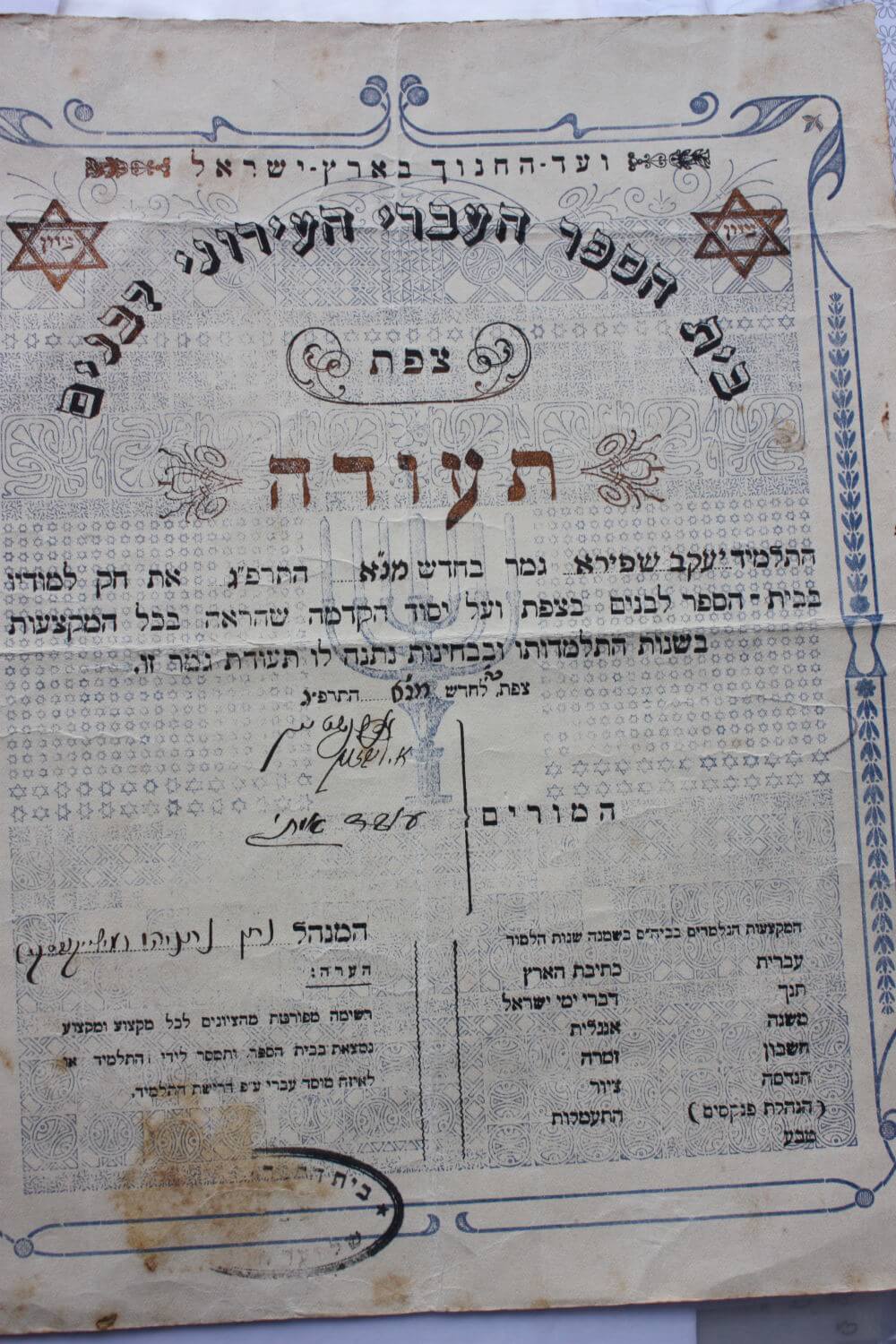
At the end of his years of study in Volozhin, the young man Nathan Milikovsky went to be examined by the Rosh Yeshiva, Rabbi Raphael Shapira, zt"l, and received a "smicha" certificate from him. In addition, he received a "smicha" from Rabbi Yitzhak Yaakov Reines, founder and head of "HaMizrahi" and Rosh Yeshiva Lida. He received these certificates in his twenties, like the rest of his friends in the yeshiva who turned to teaching.
These ordination certificates, which are explicitly mentioned in several different sources, as well as in Milikowski's manuscripts, are not mentioned at all in the article. Has the author not heard of them? Or does he believe that Milikowski and his associates fabricated the existence of these certificates?
E. Rabbinate's office in Rovna
"The writers of Milikovsky's biography note that he had already been accepted to serve as the rabbi of the city of Rubeno in Volhynia. As much as I dug, I was unable to find documentation of this appointment... The explanation that appears in newspaper articles on the thirtieth day after his death is that in the end the appointment did not come to fruition, and this was because World War I broke out and cut short the plan."
These things are not accurate. There is no connection between the cancellation of his coronation and the First World War, which did indeed break out nearby.
The real story is this: In 1914, the rabbi of the city of Rovna, the gaon Rabbi Yitzhak Shlomo Yoel Sherman, zt"l, author of the book 'Pitchei Shearim', passed away. The community began to search for a worthy candidate to fill his place and ascend to the rabbinate. In those days, the name of Rabbi Natan Milikowski came up on the discussion table as a potential candidate for leadership of the community. After a tense vote held one winter day, Rabbi Milikowski was elected by a majority vote. The news of the appointment was even published in the newspaper 'HaTsfira' (4th of Kislev 1914 - December 3, 1913): "Rovna. The preacher H. Milikowski from Lodz was elected here as the rabbi of the community."
However, the joy was premature. Behind the scenes, the community was in turmoil, and fierce disputes were tearing the city apart. Several informants, from the camp of fanatics opposed to Zionism, approached the regional minister and slandered the Zionist Milikowski. The minister invalidated the elections and their results, and this was the real reason Milikowski did not begin his term in Rovna (this was published in the newspaper 'HaTsafira').
Incidentally, the person chosen to serve as the rabbi of Rovna was a young and exceptionally talented rabbi, the Gaon Rabbi Simcha-Hartz of Yafit, zt"l, who was the son-in-law of the city's previous rabbi, Rabbi Sherman zt"l.
This Article was written by Moshe Nachmani all credit goes to him


Comments
Post a Comment