All credit goes to Hannah Feuer and http://forward.com/
Three stars in the night sky mark the Sabbath’s end. Now, one astronomer is calculating exactly when those stars appear.

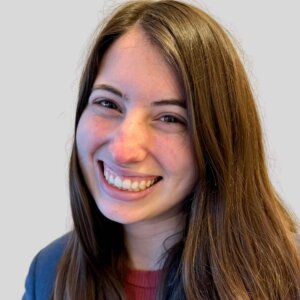
Aster Taylor has a scientific approach to calculating Shabbat’s end. Graphic by Aliza Gans / Photo by Mitch Hrdlicka via Getty Images
By Hannah FeuerAugust 21, 2026
Aster Taylor observes Shabbat on their own time — literally.
For the past year, Taylor, a Ph.D. candidate in astrophysics at the University of Michigan, has been keeping Shabbat according to a schedule they devised using astronomical data.
So this Saturday, when Chabad of Ann Arbor says Shabbat will end at 9:09 p.m., Taylor will observe for nearly 11 more minutes. Where does Taylor, 25, get the chutzpah to challenge longstanding Jewish tradition?
“We live in the modern world. We have computers, we have catalogs of all the stars, and especially in the 80s, the construction of more significant telescopes,” Taylor told the Forward. “We have a pretty good understanding of how the sky affects our vision. So we can now just calculate this, right?”
They might have a point. In true “two-Jews-three-opinions” fashion, there’s actually no universally accepted time that Shabbat ends. But most people can agree on this: Shabbat ends at nightfall, defined by the Talmud as when three medium-sized stars in close proximity to one another are visible to the naked eye.
But what defines a medium-sized star and how close is close enough? Whose eyesight should be trusted? Those answers are not clear, leaving it up to rabbis to impart practical guidance.
Since without astronomical expertise, determining which stars make the grade is pretty difficult for the average Joseph, rabbis rely on proxy criteria. Today, many Orthodox communities use a standard credited to the venerable Rabbi Yechiel Michel Tucazinsky, who in 1929 determined three stars are visible when the sun sets 8.5 degrees below the horizon. Others follow the teachings of the 12th-century Rabbeinu Tam, who places nightfall 72 minutes after sunset.
But those approximations didn’t satisfy Taylor, an aspiring professor currently writing their dissertation about giant planet formation. Taylor craved a more scientific approach.
So for a few nights over several months, Taylor went to a local park, sat at a picnic table and every two minutes measured the sky’s brightness with a light meter.
Taylor settled on a brightness standard for a medium star — between magnitude 2 and 3 — and determined that three stars of that brightness need to be within 10 degrees of one another, close enough that an observer could see all three stars without moving their eyes.
Taylor then built a computer model to determine when three stars that meet those conditions become visible, taking into account various atmospheric conditions. That model became a web app that calculates Shabbat times for any given location and elevation.
The results were striking. Based on Taylor’s calculations, Shabbat should often end around 10 minutes later than the time given by the conventional approximation — no small discrepancy for those who faithfully observe the Sabbath.
Taylor’s computations are intriguing Jewish scholars. Masorti: The New Journal of Conservative Judaism has agreed to publish Taylor’s research paper on the topic this winter.
The Forward also shared Taylor’s findings with two rabbis: Yaakov Hoffman of the modern Orthodox Bridge Shul in Washington Heights, who wrote a scholarly article about Shabbat’s end, and Jack Shlachter — who in addition to being a rabbi in Los Alamos, New Mexico, just so happens to have a Ph.D in physics.
Both were impressed. “There’s always room for science to enhance these practices,” Shlachter said. “This author is doing things in a very admirable fashion — trying to be fully aware of tradition, but also incorporating more modern, sophisticated techniques.”
Hoffman said it was “very impressive” that Taylor “was trying to research these things from a contemporary astronomical perspective, and to really put so much effort and passion into accurate determination of the time.”
If Taylor “wants to add a few minutes to Shabbat,” he added, “that doesn’t bother me.”
What if Shabbat never ends?
As any city dweller knows, the stars don’t exactly come out in force at night.
Once Taylor factored light pollution into their calculations, it produced a somewhat uncomfortable result. In New York City, Taylor said, light pollution is so intense that three medium stars in close proximity will never be visible this year. In Jerusalem, only a few months of the year offer enough clear visibility to see Taylor’s criteria.
“The conditions that end Shabbat are never met,” Taylor said, “which is obviously a problem.”
Taken literally, that would mean endless Shabbat. In their paper, Taylor wrote that such a scenario would “require most observant Jews to quit their jobs, refrain from cooking, and spend their time studying Torah.” That would be both “unrealistic” and “lessen the sanctity” of the Sabbath, Taylor wrote.
Fortunately, there is a rabbinic workaround that dates back long before the age of light pollution.
The 16th-century Rabbi Yosef Karo wrote that on a cloudy day, one should wait to end Shabbat until “the doubt leaves his heart.” In other words, wait long enough after sunset to be certain that the stars theoretically would have been visible on a clear night.
Taylor agrees that the same principle for clouds can be applied to light pollution. But they argue that it’s still worth knowing just how much the modern night sky has changed.
Light pollution isn’t the only factor messing with the Jewish clock. President Trump is urging the Senate to pass a bill that would make daylight savings time permanent — a measure which many Orthodox Jews oppose because a later winter sunrise would mean a later morning prayer service, making many Orthodox Jews late for work.
But it also would also push Shabbat an hour later, which could mean a less frantic rush to get home before sunset on wintertime Friday afternoons.
Those potential changes raise a broader question. As modern life becomes increasingly divorced from the natural rhythms of the Earth, to what extent should Jewish practice evolve?
Taylor, who attends a Conservative synagogue, said they’re in favor of maintaining Jewish tradition when possible — but that doesn’t mean it can’t also be improved.
“We should be using a calculation like this in communities in the future,” Taylor said. “It’s a strict upgrade to the way we’ve been doing things in the past, and so I’m hopeful that we’ll start using this more widely.”
Paradoxically, in Taylor’s case, they believe modern technology enabled them to get closer to the literal meaning of the traditional text. It was the ancient rabbis, lacking that science, who had to settle for the next best thing.



No comments:
Post a Comment