Rabbi Moshe Tzuriel, who passed away this week, belonged to all sectors but also distinguished himself from them in his unique path, which he outlined according to his study and understanding. His path in studying Torah included a vast scope of sources and an investment of effort in their orderly memorization, and it is reflected in the dozens of books he published, including the famous "Otsrot HaRai" series.


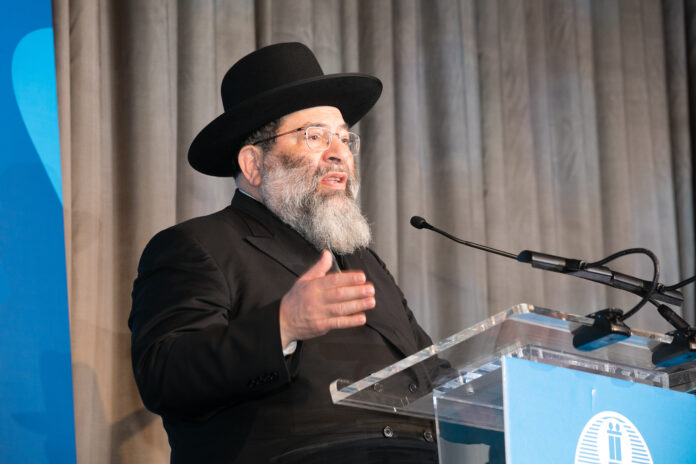
Rabbi Moshe TzurielPhoto: Self
Rabbi Moshe Tzuriel (85), a prolific author and yeshiva leader in religious Zionism, who passed away last Thursday after a long battle with illness, recently realized that his days were numbered.
He called his student, Rabbi Shlomo Levy, head of the Hesder Yeshiva in Rishon LeZion, with a request. "The rabbi really wanted us to publish three new volumes of his Torah, packed with a new blessing, treasures on the Jerusalem and Babylonian, and new treasures on the weekly parashat," says Rabbi Levy in a conversation with the newspaper 'Besheva'.
"The rabbi wanted the books to be published before he returned his soul to the Creator. I told the rabbi: No matter how or what, on my responsibility, you will see them again in your lifetime. And indeed the rabbi saw them and was happy and joyful. Now we will distribute them in his memory and in memory of his great Torah."
During his illness, his students also slowly began to realize that it was worth visiting the rabbi as soon as possible. "About a month ago, when it became known that the rabbi's condition had worsened significantly, I immediately called my son, who is studying in a yeshiva in the north, and told him to come to the rabbi's house," says his student Assaf Azulai, a contractor and construction entrepreneur. "At that time, I left my house, we met in Bnei Brak, and we arrived at the rabbi's house. After a short wait during which we studied together in the rabbi's living room, we were allowed to enter his room. When I saw him, I almost cried, because it was hard for me to see him yellow and weak. I introduced my son to the rabbi and asked him to bless him. The rabbi himself opened the door and said to him: I ask you never to leave the country. I told the rabbi that my son is drawn to Breslov, and I am afraid that he has gone to Uman. The rabbi replied that there are also methods in Breslov that only those who live in exile can come to Uman, but not those who live in the Land of Israel. The rabbi asked my son to go with his granddaughter and bring me some likkuti moharen.
"When the book arrived, the rabbi asked us to open at the sign KN"H and gave us a sign to remember from the verse 'Buy truth and do not sell.' The rabbi's way was to give signs in every source. The rabbi pointed to the middle of the sign and asked me to read. There were speeches in praise of the Land of Israel, and the rabbi would repeat certain sentences orally. When I came to one sentence, the Rabbi repeated it several times and emphasized it in our ears: 'It turns out that the essence of the work of an Israeli is to be justified by the Land of Israel, which is a form of faith, a form of lengthening of the nose, a form of the power of growth and the power of growth, through which one is justified in his work, and without looking at any obstacle, hindrance, or confusion, that one cannot truly be justified in serving Hashem except through this and the like.' The Rabbi said: Did you hear? It is impossible to be justified in serving Hashem without confusion and impediments if not through the Land of Israel. I thought that the Rabbi would cool my son from Breslav, because that is how I came to know his views, but the Rabbi told my son and me that Breslav was good, and even encouraged him to follow his heart. At some point I broke down and in a storm of emotions told the Rabbi that I could not see him like this, and that the Rabbi was dear to me and what would we do without him. The Rabbi immediately said: I ask not to be sad, only happy."
It was difficult to define Rabbi Tsuriel. A leader in religious Zionist yeshiva, he authored dozens of books, including seven volumes of the Treasures of the Rabbis, a key to the books of Rabbi Kook with articles and commentary on his words, as well as his Torah from books and manuscripts. The rabbi taught in conservative yeshiva and was firm on matters of the Land of Israel, but on the other hand was halachically lenient on issues such as prenuptial agreements and the conversion of minors. At the same time, the rabbi was a resident of Bnei Brak all his life, and his descendants belong to the Haredi community, including his son Rabbi Avraham Tsuriel, rabbi of Nes Ziona. The rabbi himself studied for many years and became friends with several senior rabbis from the Lithuanian community. "Rabbi Zuriel was a man of truth. Wherever there was true and honest Torah, he was connected to it. Everything was in good taste and knowledge. He was honest, true, energetic. A man who was all about a walking Torah scroll, a man who was all about pure fear of God. The man who managed to walk with all the camps according to the truth. He was not a fool, he was truth on his own part," defines Rabbi Shlomo Levi.
Among the ultra-Orthodox rabbis to whom the rabbi became particularly close were Rabbi Chaim Friedlander and Rabbi Shmuel Dvir. "Rabbi Tsuriel, who lived in Bnei Brak and was particular about traditional dress, and was known in the home of Rabbi Kanievsky as a tzaddik and knowledgeable - studied in his youth at the Rabbinical Center with Rabbi Zvi Yehuda, and became one of the greatest commentators on the writings of Rabbi Kook years later," says his student Rabbi Eliyahu Dordak, rabbi at Yeshiva Mitzpe Jericho. "The rabbi studied with several rabbis from the Lithuanian community, who were unique in their personalities and even more so in their views, including Rabbi Chaim Friedlander, Rabbi Shalom Ulman, and Rabbi Shmuel Dvir. This explains Rabbi Tsuriel's attachment to them, and his views that developed over the years."
In his youth, Rabbi Zuriel studied at the Merkaz HaRav Yeshiva. "During the years he studied at the Merkaz HaRav, I remember how he specialized very much in intellectual literature, such as the writings of the Maharal, the Language of Truth, and Rabbi Kook," recalled Rabbi Yaakov Ariel, one of the senior rabbis in religious Zionism. "I naturally saw his publications, and I was very impressed by the wealth of information, the collection, and the perseverance. He opened up many treasures for the great men of Israel. This was a great undertaking."
During his years of study at the Rabbinical Center, he became one of the students of Rabbi Zvi Yehuda Kook and also participated in the classes of the hermit Rabbi. "Once, when we were studying 'Orot HaTorah' with Rabbi Tzuriel, he showed me that he had a book 'Orot HaTorah' that he had studied in a group with Rabbi Zvi Yehuda. He had a great love for Rabbi Zvi Yehuda, and he summarized all the study they had had together," says his student Rabbi Nir Shkuri, Rosh Yeshiva Bnei Akiva Ra'anana.
From 1977 to 1985, he was a mashgih at the Shaalavim Yeshiva. "He gave many lessons in the yeshiva, especially in the Haral and the rabbi's writings. An extraordinary scholar, a great scholar with an abnormal, unique memory, who had a deep and personal connection with many students," Rabbi Yoel Katan said in the lesson. According to him, following an incident involving Rabin's assassination, he stopped teaching at the yeshiva. "One of Yigal Amir's friends, Dror Adni, was a prominent student of Rabbi Tsuriel, and the media said that Rabbi Tsuriel was Yigal Amir's rabbi. Our public was in hysteria and general fear, they went crazy against us. Out of fear, the heads of the Shaalavim Yeshiva and its management decided to put him on unpaid leave, they were so afraid of getting into trouble, and Rabbi Tsuriel took it very hard, he said it was unfair. In the end, the police didn't even question him, it was all the media."
The honor of a first-grade student
The next stops after Shaalavim were the Rishon LeZion, Mitzpe Jericho and Torat Chaim yeshivots, and during this period he also authored dozens of important books that entered the Jewish bookshelf. In addition, the rabbi compiled dozens of books by the great men of Israel, including books of Kabbalah, and authored dozens more books of collections and keynotes on the great men of Israel. "The day he left the Shaalavim yeshivot, after Rabin's assassination, I was at his house and said to him: We urge the rabbi to teach at the Rishon LeZion yeshivot," says Rabbi Shlomo Levy. "After ten years he said to me: Maybe you want to bring in another rabbi, I told him: The opposite is true. Since he started teaching, we have had very deep ties with him."
However, Rabbi Levy emphasizes, his connection with Rabbi Tzuriel began earlier. "My first encounter with him was through his books. When I was in Shiur A at the Rabbi Center, in Room 11B with Rabbi Menachem Burstein, we had Rabbi Tzuriel's books. Later, I met him through my older brother Rabbi Shimon Levy, who studied at the Shaalavim Yeshiva. We talked and bonded. The first book I received from him was Beit Yehezkel in its first edition. In this book, you saw how Rabbi Tzuriel knew how to deal with the different streams in the world of Torah and found the path of honesty and truth that marked his entire path in life after that. I remember how I consulted with him about a book that could be very helpful in studying the inner workings of Torah, and he recommended to me Pithai Shearim by Rabbi Yitzhak Isaac Hever.
"In the yeshiva, we drew a lot of strength and power from him to find new writings by the late Rabbi Zacharias and bring them to light," says Rabbi Levi. "During his lifetime, we published the treasures of the Rabbi A-Z, and we plan to publish additional volumes. I saw how deeply Rabbi Kook influenced him by the very fact that he took it upon himself to publish the writings of Rabbi Naftali Herz Wiesel, and all this because the rabbi writes in a letter to his brother that there are profound and wonderful things in Rabbi Wiesel's writings, even though one does need moderation to understand what he writes. Until about 2014, he taught at the yeshiva, and then he said: I thank you very much for letting me teach classes here. We were privileged to receive the inspiration of learning, truth, justice and honesty that characterized him, the wonderful agility that he had, and the mental moderation and conceptual brilliance that were a lamp to his feet."
In addition to being the rabbi at the Rishon LeZion Yeshiva, he taught for about two years at the Mitzpe Jericho Yeshiva from 1975 to 1976. “Rabbi Tzuriel taught a weekly class in the early years of the high yeshiva in Mitzpe Jericho, which we founded together with the rosh yeshiva, our teacher Rabbi Shabtai Sabbat, Shlita,” recalled Rabbi Dordak. “I once saw how meticulous Rabbi Tzuriel was in respecting the students. We studied in class, and discussed the details of the gemara in tractate Shabbat about Rava, who would bleed from his hands while studying and would not feel the pain. One student offered a wrong interpretation, and the rabbi asked us to look at Rashi. A student volunteered to bring the gemara. He ran quickly, as we were all impressed by the rabbi’s agility, but another student looked under the table and found a copy of the gemara Shabbat, and handed it to the rabbi.
"Rabbi Tzuriel refused to accept it, and asked him to lower the book, saying, 'We'll wait until the student comes, so that he doesn't feel like he's running in vain.' And so the rabbi, the most agile and quick person I've ever known, chose to wait a precious time with the entire lesson, in order to protect the honor of that student in lesson one. And so when he read Rashi and everyone understood that the rabbi was right, so that the questioner wouldn't be ashamed, the rabbi said, 'Now I understand why Rashi had to interpret it this way, to clarify your question.' I will never forget the warm and fatherly attitude that the rabbi showed to everyone, and especially to his students."
The connection with the yeshiva ended relatively quickly, but the relationship between Rabbi Dordak and Rabbi Zuriel remained close for many decades. "The rabbi accompanied me for years. I debated a lot about whether to accept the offer that our teacher Rabbi Shabtai Sabbatu Shlita repeatedly made to me, to take on the burden of the position of deputy to the head of the high school yeshiva. I consulted with Rabbi Zuriel on the subject, of course. Although he recognized the great value of this position, he did not pressure me, and even emphasized the advantages of my activity in disseminating Torah, in publishing books such as 'Mishna Sedora.' In the end, I decided to accept the offer, and Rabbi Zuriel was happy and sent me flowers to strengthen my spirit and encourage me in my new public mission. And he did not forget me. Even though he would announce that he did not usually attend celebrations - when I brought children and grandchildren to be blessed before him, he always received them with joy and tenderness, prayed on their behalf and encouraged them. He would keep the children's names in his memory, and sometimes asked me about the progress in their lives."
"Continue to make me wiser"
Rabbi Tsuriel's phone number was available to anyone who asked. Dozens of times, as a yeshiva student, I called him with a variety of questions, and the rabbi would answer quickly and pleasantly, and always with a special source that I did not know. "My first conversation with Rabbi Tsuriel was on Lag BaOmer in the 10th grade," says Shlomo Kenisberg. "A guy told me that he did not believe in the Zohar because it says there, 'Three times a year, every memory of you will see the face of the Lord, the Lord, the Lord'." I did not know what to explain and called Rabbi Tsuriel, and he immediately told me: Look at the Rabbi in the path of the Torah, and explained to me that learning is from 'at' peni, which comes from the Rabbis. He talked to me about the Torah scholars who are the body of the Torah. This was the first of hundreds of conversations, all of which the rabbi answered warmly and cordially, and with impressive expertise. Once I dared to ask him - how does the rabbi know everything?! He laughed and said: I do not know everything, there is a lot that I know, thank God, but even more that I do not know. He instructed to repeat the study four times and write in a notebook."
Kenisberg's relationship with the rabbi developed to the point of consulting on decisions about where to study. "When I consulted with him in the eighth grade about choosing a high yeshiva, one of the considerations he presented in favor of the Rabbinical Center was the large library. He calculated that I should be able to read all the books in the library in such and such a time," says Kenisberg. "The rabbi also knew how to acknowledge his gratitude with great warmth for a source I had referred him to or for a book he was unfamiliar with, and so he wrote to me on one occasion: My dear esteemed friend, blessed be your lot! How much you have enriched me by bringing to my attention the book of the Bach. I have been studying the magnificent introduction to the book by Rabbi David Shapira for half an hour now, and I have enjoyed it very much. May you be blessed, Adi, for enlightening my eyes. Continue to enlighten me."
Not only was the phone available, the rabbi's door was also open to every Jew. "At the age of 14, when we were taking our first steps in the world of teshuvah, I studied at the Metivta in Bnei Brak, and one day I was walking down Hazon Ish Street among the bookstores, and in one of the stores I saw the treasures of the Rabbi Kook," says Rabbi Nir Shkuri. "The book had a picture of Rabbi Kook on it, and the author was Rabbi Moshe Tzuriel of Beit Hillel Street. I went by the address, knocked on the door, he opened it for me and actually sat down and explained to me for an hour and a half about Rabbi Kook, since then my soul has been tied to his soul. The connection to the rabbi gave me the feeling of a son. All of us, his students from all over the country, felt like a father who cared for us."
Since then, every time I met Rabbi Kori with Rabbi Zuriel, he would learn something new about the rabbi. "The rabbi asked me if I knew Torah verses by heart, and I told him what I knew. He closed his eyes and told me that it was five minutes at most, 'You don't walk the path for more than five minutes? You need to remember much more.' He had the ability to learn without books, this is a story that expresses the utter lack of his memory and what he demanded of his students. He had study methods based on repetition and how to remember everything that was written. When we studied the verse 'And they will return again,' he showed me a midrash in Shochar Tov on the verse, and when I got home I wanted to mark it in my book, but I couldn't find it. The rabbi said to me: What edition do you have? I told him, and then the rabbi answered me immediately: In this edition, it's on such and such a page on page 2, it was on every page of the Torah."
For Rabbi Zuriel, greatness was combined with great humility and love for the students. "A few months ago, the rabbi called me, and I immediately left the yeshiva of the Ramim, 'How are you? How are you feeling?' he asked. We used to study together once every few weeks, but because of the end-of-year rush, I didn't have time, and he was very worried and asked if everything was okay. I reassured him and said we would meet. He was kind to his students. He would even take care of our financial expenses, and fight the whole matter of materialism. I remember once we talked about Schottenstein and the rabbi said it was good to study in it, and then I bought a volume and he got angry: Why waste money buying Schottenstein? It costs a lot and you will be blessed, save the money only for the necessary things and study from the volume in the library. He had a precise attitude towards money, because with the rabbi everything was precise."
His special qualities were also evident in issues concerning the Land of Israel, where he was most forceful. The rabbi strongly opposed the establishment of a government based on the Ra'am party, and during the expulsion from Gush Katif he wrote an article stating that anyone who participated in the expulsion would be expelled from the Jewish community and would not be allowed to participate in the minyan until he repented. "During the expulsion from Gush Katif, the rabbi wrote a halachic ruling that one must refuse a command, and one rabbi came out strongly against him and believed that it was forbidden to refuse a command. I came to his house for one of our fellowships and saw that he was studying the books of the rabbi who had been in dispute with him. I immediately asked him: What happened that the rabbi was studying these books? He told me: So that there would be a dispute for the sake of heaven and not 'infringements.' Second, in these and those books that I publish, I put in his name, so that it would be clear to me that I had no 'infringements.' This story shows how honest the rabbi was."
Finally, Rabbi Shkuri talks about the farewell to Rabbi Zuriel. "When I was with him for the last time, the Rabbi was very ill. The Rabbi said to me: Why are you sorry? This world is like a corridor, all of life is waiting for these moments. He said this with great firmness. He brought many sources about the corridor and the lounge from the moralists and repeated that we will not be in sorrow and that we will be in joy, and that this is the great test of faith, we need to strengthen everyone. What a tremendous step for a person who knows that he is about to leave this world, and strengthens everyone and the students in particular. A tremendous miracle."



No comments:
Post a Comment